
 Apple Podcasts
 Spotify
 Youtube Music
 Amazon Music
 Audible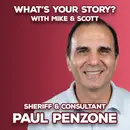
Former Maricopa County Sheriff Paul Penzone lost once to Sheriff Joe Arpaio after getting outspent 13 to 1. His wife heard him complaining at the TV, took his man card, and told him to step up again.
He did. Then he won by 13 points.
Paul tells Mike Lindstrom and Scott Leese the part most people never hear. He was a volunteer bailiff in high school. He spent 21 years at Phoenix PD. He ran as a Democrat after Republican strategists told him he had no shot. He refused to endorse anybody, including two presidential candidates, because he did not want the badge used as a political weapon.
His first week on the job, a naked woman stole a patrol car in Casa Grande. A deputy grabbed a blanket to cover her. She jumped in the car and took off. That is the job.
Paul also gets into the hard stuff. Culture over entertainment. Why he closed the circus around Tent City and pink jumpsuits. Why deadly force is not a choice, it is the lack of a choice. Why cameras and tools can steal the skill of talking someone into handcuffs. And what it costs a family when you have to knock on a door and tell a wife she is a widow.
If you have ever been told you cannot win, this one will sit with you.
Topics Covered
- Paul’s path from Trenton, New Jersey to Cortez High School and Phoenix PD
- The courtroom summers that taught him to seek the truth and speak the truth
- Why he will not let a bully have the last word
- The living room fight with his wife that launched the race against Joe Arpaio
- Losing in 2012 by four points, then getting a birthday job rejection that sent him back
- Election night 2016 with no TVs, no radios, and 35 people in a sandwich shop
- Joe Arpaio’s concession call after 24 years in office
- The first change he made as sheriff: culture
- Why law enforcement should work like a good referee, not a reality show
- Cameras, Big Brother, and what happens when discretion disappears
- How body cams and 2020 changed an officer’s instincts on a stop
- Tasers versus talking, and why he never once maced anyone
- “The use of deadly force is not a choice. It is the lack of a choice.”
- Leaving the badge without letting the title eat your identity
- Praying the rosary, Sundays with no detail, and four line-of-duty death notifications
- The bathroom stall at D-backs stadium and what it costs to be “on” everywhere
- The mantra: do not live for the approval of people
Chapters
- 00:00 First week as sheriff, a naked lady steals a patrol car
- 01:27 Welcome to What’s Your Story with Mike and Scott
- 02:25 Paul’s story, from Trenton to Phoenix PD
- 04:22 Volunteer bailiff and seeking the truth
- 06:31 Why he never backed down from bullies
- 08:38 Taking on Sheriff Joe Arpaio
- 13:08 Losing in 2012, then running again
- 16:12 Election night 2016 with no TVs
- 18:42 Joe Arpaio’s concession call
- 19:40 Culture over entertainment
- 22:46 Cameras, Big Brother, and discretion
- 24:42 How body cams changed everyday stops
- 28:49 Deadly force is the lack of a choice
- 29:22 Leaving the badge without losing yourself
- 31:48 Family, faith, and knocking on a widow’s door
- 35:15 The bathroom stall and being “on” as sheriff
- 37:17 The mantra he lives by
- 38:32 Outro
If this one hit, subscribe and send it to somebody who still thinks one person cannot move a machine that big. Then tell us in the comments. When did somebody tell you that you had no shot, and what did you do with that?
Thanks for watching! If this episode moved you, hit LIKE, drop a comment with your biggest takeaway, and SUBSCRIBE for more raw stories, mindset shifts, and real conversations.
New episodes drop every Tuesday morning!
- TikTok: tiktok.com/@whatsyourstorypod_com
- Instagram: instagram.com/whatsyourstorypod_com
- X: x.com/WYSPodcast_com
- Facebook: facebook.com/WhatsYourStoryPod
This episode is sponsored by e3 wealth. If you need someone to help build your financial future, check out their website, and tell them Mike & Scott sent you.
Mike's Website: mikelindstrom.com
Scott's Website: scottleeseconsulting.com
NEW WEBSITE! whatsyourstorypod.com
Paul Penzone:
First week, Sheriff.
Paul Penzone:
I walk out of the car.
Paul Penzone:
The guy who picked me up goes, "Hey, you gotta hear this." Turns the radio on.
Paul Penzone:
Felt bad for the deputy.
Paul Penzone:
Lady's running around naked, like out in Casa Grande at a gas station.
Paul Penzone:
Somebody calls it in.
Paul Penzone:
He gets out there, he's trying to do the right thing.
Paul Penzone:
He gets out of his car, he grabs a blanket to cover her up.
Paul Penzone:
She jumps in his car and takes off.
Scott Leese:
Oh, shit.
Paul Penzone:
He commandeers a truck with a couple and tries to chase her.
Paul Penzone:
So that was like my first week of being Sheriff I go, "Oh, that's
Paul Penzone:
law enforcement back in it. A naked lady stealing one of our cars."
Scott Leese:
That's great.
Paul Penzone:
Yeah.
Paul Penzone:
Intro Band: Lean in closer. This is your time.
Paul Penzone:
Hit record on your crooked
Paul Penzone:
life. What's your story?
Paul Penzone:
(Hey!) Say the words out loud!
Paul Penzone:
Mike & Scott gonna crack that crowd.
Paul Penzone:
What's your story? (Hey!) Turn it up, let's go!
Paul Penzone:
Every voice. Every scar.
Paul Penzone:
Every road. What's your story?
Paul Penzone:
Mike and Scott.
Paul Penzone:
Let's talk.
Mike Lindstrom:
Hey everyone, Mike Lindstrom, my man Scott Lease.
Mike Lindstrom:
"What's Your Story?" You know, I was thinking about today, Scott, we're
Mike Lindstrom:
celebrating our year coming up.
Mike Lindstrom:
All the guests that we've had, you've had musicians, CEOs, an actual
Mike Lindstrom:
elected official, and a Sheriff.
Scott Leese:
We've never had either of those.
Mike Lindstrom:
Neither one.
Scott Leese:
No elected officials.
Scott Leese:
Nobody from law enforcement.
Mike Lindstrom:
Well, we're talking about the Sheriff.
Mike Lindstrom:
Think about that, bro.
Scott Leese:
To be honest with you, I spend most of my time
Scott Leese:
trying not to think about sheriffs.
Mike Lindstrom:
I know.
Mike Lindstrom:
agree with you, but I think this, today I wanna dig in on this one.
Mike Lindstrom:
Some of the stories that this guy's seen, I can't imagine.
Mike Lindstrom:
A lot of people around the United States have heard about,
Mike Lindstrom:
like, Tent City and the jails.
Mike Lindstrom:
We used to have Sheriff Joe Arpaio where, had people wearing pink
Mike Lindstrom:
and keep them out in the heat.
Mike Lindstrom:
And then this gentleman comes along.
Mike Lindstrom:
So it's kinda nice to have a friend, but actually have
Mike Lindstrom:
someone of your stature on here.
Mike Lindstrom:
So welcome, Paul Penzone.
Paul Penzone:
Honor to be here.
Paul Penzone:
Congrats on a year.
Paul Penzone:
That's a big deal
Paul Penzone:
- Scott Leese: Yeah.
Paul Penzone:
Thank you.
Paul Penzone:
…for you guys!
Mike Lindstrom:
It's been a year.
Mike Lindstrom:
It's hard to believe, but you're helping us celebrate
Mike Lindstrom:
this final swift into the year.
Paul Penzone:
Honored to be here.
Mike Lindstrom:
So we'll start off every single podcast with "What's your story?"
Mike Lindstrom:
So give us the abbreviated version before we start going into all the good stuff.
Paul Penzone:
All right.
Paul Penzone:
Cliff Note.
Paul Penzone:
born in Trenton, New Jersey.
Paul Penzone:
Left there relatively young just before junior high, but have a lot
Paul Penzone:
of fond memories growing up on the East Coast, going to the shore for
Paul Penzone:
the summer, and just the culture and living in a, just an old school
Paul Penzone:
Roman Catholic Italian community.
Paul Penzone:
So that was my roots right there.
Paul Penzone:
We came out here because my mother had severe respiratory problems and
Paul Penzone:
back at that time, like late '70s, early '80s, it was still a desert.
Paul Penzone:
So the dry climate literally saved her life.
Paul Penzone:
She passed a few years ago in her mid '80s.
Paul Penzone:
but living in Arizona, which was like such a foreign thing, the Clampetts
Paul Penzone:
got in the car and my dad drove us across country and we rooted here.
Paul Penzone:
I went to Cortez High School, which is over by old Metro Center,
Paul Penzone:
for those who know it, and Metro Center's not there anymore.
Paul Penzone:
It was a rough neighborhood from the context that it
Paul Penzone:
was just blue collar, right?
Paul Penzone:
It was, mid to lower mid-income families, grinding, making a living.
Paul Penzone:
Loved sports.
Paul Penzone:
Was a decent student when I wanted to apply myself, which wasn't often.
Paul Penzone:
But there was like this defining moment: my father laid floors for
Paul Penzone:
a living, my mom worked in the justice courts… which you know very
Paul Penzone:
well because your wife's a judge.
Paul Penzone:
And I would go there sometimes with her in the summer, just to
Paul Penzone:
kind of keep me out of trouble.
Paul Penzone:
And it was my first introduction to the criminal justice system,
Paul Penzone:
the balance of the scales.
Paul Penzone:
And then my senior year in high school, I remember we had career
Paul Penzone:
day and I was wandering around.
Paul Penzone:
I walked in the classroom with her happened to be a Phoenix PD officer.
Paul Penzone:
And whatever reason, I just felt wow, what a distinguished career.
Paul Penzone:
What's something that you'd be proud of where you're serving people?
Paul Penzone:
and I've always kind of lived by the credo.
Paul Penzone:
I don't like bullies.
Paul Penzone:
So went to college, studied criminal justice.
Paul Penzone:
I was hired by Phoenix PD in 1988.
Paul Penzone:
Spent a little over two decades there.
Paul Penzone:
Retired from there, went to the private sector for a
Paul Penzone:
while, worked with nonprofits.
Paul Penzone:
And then, took on Joe.
Paul Penzone:
And that was definitely a life moment, a defining moment of one of these
Paul Penzone:
things you never expect you'll do.
Paul Penzone:
It wasn't a bucket list thing.
Paul Penzone:
It was circumstantial.
Paul Penzone:
And then I had the blessing and the privilege to be sheriff for two terms
Paul Penzone:
and retired and went back in the private sector to do a little better for my
Paul Penzone:
family as, the sacrifice you make in public safety and in public service
Paul Penzone:
is for the community, which is really important and purpose-driven, but you also
Paul Penzone:
gotta think about your own family too.
Paul Penzone:
So that's where I'm at now, just trying to give it back to the community, but
Paul Penzone:
also doing good for my own family.
Mike Lindstrom:
Yeah.
Scott Leese:
I read that you were a volunteer bailiff
Scott Leese:
- Paul Penzone: Yes.
Scott Leese:
In high school.
Scott Leese:
Right?
Paul Penzone:
Yeah, so that ties into that.
Paul Penzone:
So I would go in, I think the judge would just humor me, because it was summertime,
Paul Penzone:
my mom would take me to work with her.
Paul Penzone:
And instead of me just sitting around, the judge was like, "Here's the
Paul Penzone:
docket, And they'd walk me through.
Paul Penzone:
You're gonna call the names, and you're going to walk them in, walk them out.
Paul Penzone:
And, it was neat that the judge made me feel as though I had, real responsibility.
Scott Leese:
You felt like you were important?
Paul Penzone:
Yeah.
Scott Leese:
Yeah.
Paul Penzone:
But it also gave me a perspective that I took with me
Paul Penzone:
through my career, which was you can get very cynical in law enforcement.
Paul Penzone:
Everybody's bad.
Paul Penzone:
We're the only ones who are good, you're all guilty.
Paul Penzone:
But when you're in the courtroom, you understand the importance of the balance
Paul Penzone:
of the scales of why defense attorneys do what they do when they do it right, why
Paul Penzone:
prosecutors do what they do when they do it right, and what the outcome should be.
Paul Penzone:
And it is, you know, I try to keep it fundamental.
Paul Penzone:
Seek the truth and speak the truth.
Paul Penzone:
Law enforcement, journalism, and the courts, it's all about finding
Paul Penzone:
the truth and revealing that, and whatever the outcome is, it is.
Scott Leese:
Did that job, was that, cool amongst your friends who maybe were
Scott Leese:
all working at McDonald's or whatever?
Paul Penzone:
I kept under raps.
Paul Penzone:
let's be honest.
Paul Penzone:
Hanging out the courts probably wasn't that cool.
Paul Penzone:
But, I don't know that it was really something that talked about with them.
Paul Penzone:
It was just one of those things, in the family, my mom trying to give me
Paul Penzone:
some structure, I think was a blessing.
Paul Penzone:
But it was a relatively small window of time.
Scott Leese:
But that seeking of the truth that you're talking about,
Scott Leese:
that had to be one of the sort of starting points, one of the origins of
Scott Leese:
- Paul Penzone: Yeah.
Scott Leese:
…of that with you.
Paul Penzone:
Yeah, and I think that.
Paul Penzone:
Well, I'd go back a little further, respectfully.
Paul Penzone:
I am a believer, that we look at all the challenges that young adults face
Paul Penzone:
nowadays, and I go, "Okay, so through my life, there were so many critical
Paul Penzone:
times where, if you go left instead of right, you try drugs because of peer
Paul Penzone:
pressure instead of saying not me. You make the mistake and do something and
Paul Penzone:
harm someone." All the different things that every adolescent's challenged with.
Paul Penzone:
My North Star was always like, "I didn't wanna disappoint my
Paul Penzone:
family." I didn't wanna put a smear.
Paul Penzone:
Maybe that was coming, from where I was raised.
Paul Penzone:
So the truth for me was really about just trying to find a way
Paul Penzone:
to… none of us are perfect, but be the best version of yourself.
Paul Penzone:
But if you can't be truthful, then I think that your character and your
Paul Penzone:
integrity is flawed from Jump Street.
Paul Penzone:
And not judging others because we all have our weak moments.
Paul Penzone:
But I do embrace that very tightly and I try to, when I had the chance to be
Paul Penzone:
in law enforcement and to lead in law enforcement, that was my North Star.
Mike Lindstrom:
I always say that things happen to us between the ages, usually
Mike Lindstrom:
between five and 12 that really define you because in between birth and four, you
Mike Lindstrom:
don't have a lot of big memories unless they're super memorable, like traumatic.
Mike Lindstrom:
So five to 12, you have things that happen.
Mike Lindstrom:
Divorce, marriage, girlfriend, boyfriend, all that stuff that happens, right?
Mike Lindstrom:
Failure.
Mike Lindstrom:
You said the bully thing.
Mike Lindstrom:
That just came out of your mouth.
Mike Lindstrom:
That obviously tied into one of your purposes around the job.
Mike Lindstrom:
Was there something that happened between like, five and 12 where
Mike Lindstrom:
you're like, there was things that happened to me that made me believe
Mike Lindstrom:
differently about bullying or bullies."
Mike Lindstrom:
Or maybe you were taught that.
Paul Penzone:
I don't know that I was taught it.
Paul Penzone:
I don't know where it came from other than… I can give you examples
Paul Penzone:
of moments, which I think are like you're describing really critical.
Paul Penzone:
but I always had this sense of, if there's somebody out there that's just weaker
Paul Penzone:
or vulnerable or whatever it may be, and someone's trying to pick on them, if
Paul Penzone:
there's not an intervention, if there's not somebody who's willing to say, "No,
Paul Penzone:
no, no, it's not okay," then that person's going to get away with that bad behavior
Paul Penzone:
and harm someone who isn't undeserving.
Paul Penzone:
And, growing up, I say this as a joke, but there's a lot of truth that if you
Paul Penzone:
know anybody from Trenton, New Jersey, they're always gonna stand out because
Paul Penzone:
they have a little bit of an arrogance or a swagger or just kinda, we think
Paul Penzone:
we're as cool as the other side of the pillow, especially when you're Italian.
Paul Penzone:
I moved out here and I remember, just starting school.
Paul Penzone:
Different city, different everything, right?
Paul Penzone:
New school.
Paul Penzone:
And one of the kids, see, I was the new guy, and he wanted
Paul Penzone:
to challenge me to a fight.
Paul Penzone:
And I was like, "All right, let's go." And, and I don't think he really meant it.
Paul Penzone:
He just thought "New guy and I'm gonna try to look cool."
Paul Penzone:
And he never expected.
Scott Leese:
He never expected you to say "Yeah, sure."
Paul Penzone:
You know, the fight's gonna last like three seconds before it's over.
Paul Penzone:
But it's just my attitude, not that I'm the toughest guy in town, but I
Paul Penzone:
would say you don't have to stand tall, but you sure as heck gotta stand up.
Paul Penzone:
That or seeing someone wanting to pick on a friend.
Paul Penzone:
You know, I can take the pain.
Paul Penzone:
I'm not gonna allow for someone I love to take the pain.
Paul Penzone:
And I do believe that if you're going to be in some form of public safety, public
Paul Penzone:
service, it should always be selfless.
Paul Penzone:
You should always recognize it as about sacrificing to ensure that others are
Paul Penzone:
safe, at your own risk, because if not, then evil and the bully mentality thrives.
Paul Penzone:
And I do believe right now in our society, we see it far too frequently,
Paul Penzone:
especially with the advancements and the wonderful things about technology
Paul Penzone:
and social network or social, whatever the heck they're called, platforms.
Scott Leese:
Yeah.
Paul Penzone:
That's how bad I am about it.
Paul Penzone:
Suddenly, people with ax to grind, or they just feel like they were
Paul Penzone:
victimized and they wanna lash back.
Paul Penzone:
They have this platform to do such good or such harm.
Paul Penzone:
And unfortunately, too often, we see the harm.
Mike Lindstrom:
Yeah.
Mike Lindstrom:
Going back to taking on Sheriff Joe.
Paul Penzone:
Yeah.
Mike Lindstrom:
That's a big deal.
Mike Lindstrom:
There had to be some backdoor meetings when this was all being
Mike Lindstrom:
prepared where you're getting counsel.
Mike Lindstrom:
And they're saying, "Buddy, this guy's been here forever." What
Mike Lindstrom:
were those discussions like?
Mike Lindstrom:
Were they like, "Go get him. Are you sure you wanna do this? You're
Mike Lindstrom:
putting yourself out there." Walk us through some of those backdoor
Mike Lindstrom:
conversations before you made that decision to throw your hat in the ring.
Paul Penzone:
Well, I'll work backwards if it's okay.
Mike Lindstrom:
Yeah.
Paul Penzone:
it was like, I always thought there was something wrong
Paul Penzone:
with you, but obviously I know there is now because if you're taking him
Paul Penzone:
on, your brain ain't working right.
Paul Penzone:
Most people told me there is no way, right?
Paul Penzone:
Snowball chance in hell.
Mike Lindstrom:
I thought that.
Mike Lindstrom:
I'll be honest with you, I though that when you were
Mike Lindstrom:
- Paul Penzone: You, you're one of many and I would tell you that was my fuel.
Mike Lindstrom:
If somebody was like, "Oh, great, you're gonna do great." I'm like,
Mike Lindstrom:
"Thanks." But the people are like, "No, you can't." I was like, "Oh, yeah, I
Mike Lindstrom:
can." But as I said, I'm gonna start at the end and go back to the beginning.
Mike Lindstrom:
I know Joe, and I say publicly to people, we have a unique friendship.
Mike Lindstrom:
Now, it doesn't mean we agree on everything.
Mike Lindstrom:
And obviously, I was really very much opposed to the manner in which he
Mike Lindstrom:
did things while he was in office.
Mike Lindstrom:
I wanted to see something different, in my own opinion.
Mike Lindstrom:
But we are actually friends now.
Mike Lindstrom:
We speak a couple times a month and I check on him or he'll call us and say hi.
Mike Lindstrom:
But here's how it happened.
Mike Lindstrom:
I was sitting in, not sitting, I was actually probably
Mike Lindstrom:
standing in my living room.
Mike Lindstrom:
TV's on the wall.
Mike Lindstrom:
and people have heard this story.
Mike Lindstrom:
And there was a news conference and it was, Sheriff Joe.
Mike Lindstrom:
and I'm a believer that leadership is about, you don't brag about you, you
Mike Lindstrom:
talk about those who do the job, right?
Mike Lindstrom:
You take the hits, you give them the glory.
Mike Lindstrom:
You don't make the story about you, you make a story about
Mike Lindstrom:
how can we do more for others?
Mike Lindstrom:
And his twist was a little bit different than that.
Mike Lindstrom:
So he's having this news conference and I kind of verbalize outwardly.
Mike Lindstrom:
I'm like, God, why does he do that?
Mike Lindstrom:
It's just so ridiculous and it goes against what I believe that
Mike Lindstrom:
profession should represent.
Mike Lindstrom:
Now, maybe that's a little longer than what I said in the moment.
Mike Lindstrom:
But I hear this voice and it's like, well, if you don't like
Mike Lindstrom:
it, do something about it.
Mike Lindstrom:
It was my wife who you know.
Mike Lindstrom:
She was in the kitchen.
Mike Lindstrom:
She heard me bitching.
Mike Lindstrom:
And she's like, "All right, big boy. If you don't like it-"
Scott Leese:
Step up.
Paul Penzone:
Yeah, step up.
Scott Leese:
Gauntlet thrown.
Paul Penzone:
So I had this moment, and I tell people, she took my man card.
Paul Penzone:
And told me a little offend about that.
Paul Penzone:
oh, I'm not being chauvinist.
Paul Penzone:
She took my man card, right?
Mike Lindstrom:
That's a saying!
Mike Lindstrom:
That's a real thing.
Paul Penzone:
Yeah.
Paul Penzone:
And so I went through my head and I'm like, okay, do you not like it?
Paul Penzone:
Are you willing to do something about it?
Paul Penzone:
If you are willing to do something about it, are you qualified to
Paul Penzone:
do the job that you claim you can do better than somebody else?
Paul Penzone:
'Cause it shouldn't be, I don't like you and you're doing it wrong.
Paul Penzone:
It should be, I believe it can be done better, therefore I'm gonna give it my
Paul Penzone:
best because I think I can for others.
Paul Penzone:
And I kinda went through that exercise and then I turned to Veronica
Paul Penzone:
and I'm like, "Are you serious?" And she's like, "Yeah, why not?"
Paul Penzone:
And to her credit, when you run against somebody as big as him, I don't know
Paul Penzone:
how familiar you are not having lived here, but dude was bigger than life.
Paul Penzone:
He was known internationally, right?
Paul Penzone:
and his war chest, when I ran against him, he had $13 million to my one.
Scott Leese:
Hmm.
Paul Penzone:
Right?
Paul Penzone:
So you're gonna get pounded.
Paul Penzone:
And you have to have the tenacity to say, Rocky Baboa-esque, it ain't
Paul Penzone:
how many times you get knocked down.
Paul Penzone:
It's how many times you're willing to get back up.
Paul Penzone:
Because it was brutal.
Paul Penzone:
And I like to share this part of the story, because you
Paul Penzone:
said we're their backstories.
Paul Penzone:
I initially, I was independent, and I'm like, "I'll run as a conservative
Paul Penzone:
Republican because I probably lean that way a little bit more.
Paul Penzone:
Cops just normally do." And I met with some strategists and
Paul Penzone:
they were like, "Yeah, dude, no.
Paul Penzone:
Please, as a matter of fact, step back from the ledge.
Paul Penzone:
If we support you, first of all, you got no shots.
Paul Penzone:
Secondly, his machine will destroy you, us, and everybody else we support." And
Paul Penzone:
then the Democratic Party heard that I was considering running, came to me
Paul Penzone:
and said, "Hey, why not on our ticket?"
Paul Penzone:
So we did have meetings, and we negotiated what that meant.
Paul Penzone:
And I said, "Listen, if you promise to never ask me to endorse anybody for office
Paul Penzone:
or to support any legislation outside of law enforcement that I already believe
Paul Penzone:
in, then we can have an agreement.
Paul Penzone:
But if you think that if I was lucky enough to win, I'm gonna
Paul Penzone:
do for the Democratic Party what he's done for the Republican Party
Paul Penzone:
with the resources at office.
Paul Penzone:
I'm not that guy.
Paul Penzone:
We're going to be non-political.
Paul Penzone:
We're gonna serve the community and it's gonna treat everybody
Paul Penzone:
with respect." And they agreed.
Paul Penzone:
Now when I say the endorsement thing, and I apologize if I'm going on.
Mike Lindstrom:
That's good.
Paul Penzone:
That to me was one of those truth moments.
Paul Penzone:
I made that commitment from Jump Street, and I felt that if you're a sheriff
Paul Penzone:
and an elected official and use that leverage to endorse people, it's a, it's
Paul Penzone:
an influence that could be corrupted.
Paul Penzone:
Like say, you're my guy.
Paul Penzone:
I don't know you.
Paul Penzone:
He's running against you.
Paul Penzone:
And suddenly you get arrested for DUI by whomever, and the charges get dropped.
Paul Penzone:
Doesn't it look a little sketchy?
Mike Lindstrom:
Yeah.
Paul Penzone:
Or vice versa.
Paul Penzone:
You get arrested for something.
Paul Penzone:
It's like, well, hold on a second.
Paul Penzone:
When you have that kind of power of elected and law enforcement
Paul Penzone:
powers, I don't believe you should be out there moving the meter on the
Paul Penzone:
community's perspective on people.
Paul Penzone:
I think that you have to be in a different space.
Paul Penzone:
So while I was in office, I was asked a lot because people understood
Paul Penzone:
the leverage of it to include two presidential candidates, one who won.
Paul Penzone:
And I never said yes.
Paul Penzone:
I did not endorse.
Paul Penzone:
And I said, if I'm gonna say no to the person running for city council,
Paul Penzone:
I'm gonna say no to the person running for President of the United States.
Paul Penzone:
I don't wanna say I'm proud of that, but I'm glad that I stayed true to my values.
Mike Lindstrom:
Yeah.
Paul Penzone:
Sorry guys, that was like such a long answer to your question.
Scott Leese:
I think it's something to be proud of.
Mike Lindstrom:
Oh, 100%.
Scott Leese:
I'm, I'm thinking about election night itself.
Scott Leese:
[laughing] And what that must have felt like is you're sitting around
Scott Leese:
waiting for the results to come in.
Paul Penzone:
Yeah.
Scott Leese:
I have nothing to compare it to other than
Scott Leese:
being an athlete and competing.
Scott Leese:
It's like the scoreboard's right there.
Scott Leese:
I don't have to wait.
Mike Lindstrom:
Yeah.
Scott Leese:
It's not, you know what I mean?
Mike Lindstrom:
Yeah.
Scott Leese:
I'm not waiting for the results come in.
Scott Leese:
Yeah.
Scott Leese:
I never was in one of those sports.
Paul Penzone:
Yeah.
Scott Leese:
But you're sitting around, the results aren't coming in.
Scott Leese:
How, are you nervous?
Scott Leese:
Are you terrified?
Scott Leese:
Did you feel like we got this?
Scott Leese:
Were you like, "Oh, fuck, we're, we lost it."
Mike Lindstrom:
Yeah, where were you too, by the way?
Mike Lindstrom:
Tell the story.
Paul Penzone:
All right.
Paul Penzone:
So, and this is, this goes to a whole different element of my being.
Paul Penzone:
I'm very much a man of faith.
Paul Penzone:
So I actually ran against Joe twice.
Paul Penzone:
I lost the first time.
Paul Penzone:
There was an independent that jumped in the race late, and I
Paul Penzone:
ended up losing by four points.
Mike Lindstrom:
Mm.
Paul Penzone:
And that was in 2012.
Paul Penzone:
So when that was over, licking my wounds, took my abuse, that kind of stuff.
Paul Penzone:
And I'm like, "Done. Check the box."
Scott Leese:
That was Rocky 1.
Paul Penzone:
Correct.
Paul Penzone:
And that's exactly what my wife said, who's a big Rocky fan.
Paul Penzone:
So 2016 rolls around, they're still chatter, because it was such a close race.
Paul Penzone:
He'd never been that close to defeat.
Paul Penzone:
And people are like, "Are you gonna do it again?" And I said, I never say
Paul Penzone:
never, but I don't see it happening because, I had this, this epiphany moment.
Paul Penzone:
And then suddenly I'm like," Okay, I did my best.
Paul Penzone:
I don't wanna go through it again.
Paul Penzone:
It's not worth it.
Paul Penzone:
I had been working in the private sector, but I had been contacted by
Paul Penzone:
somebody for a really high profile job.
Paul Penzone:
and the CEO said, "Listen, Paul, I want you to put in for
Paul Penzone:
this." It was security-specific.
Paul Penzone:
"But just know I don't play a part in it.
Paul Penzone:
There's a board, there's whatever, blah, blah, blah.
Paul Penzone:
So there's a fair process.
Paul Penzone:
But I think you'd be good for it."
Paul Penzone:
So I put in, there were like 200 people put in for the job.
Paul Penzone:
It took months to get down to the final two, me and another guy.
Paul Penzone:
You know, you went through so many interviews, that kind of stuff.
Paul Penzone:
And then I get a phone call.
Paul Penzone:
And the phone call came on my birthday, which is the end of March.
Paul Penzone:
And it was like five o'clock.
Paul Penzone:
So on my birthday, I answered the phone.
Paul Penzone:
I see it's the HR person for that company.
Paul Penzone:
And I said, "Listen, if you got bad news, can you call me tomorrow because
Paul Penzone:
I don't want you to wreck my birthday?" And she says, "Paul, you know what?
Paul Penzone:
I'm so sorry." And the guy they chose was actually somebody who had been with
Paul Penzone:
the organization and went to go get more experience and came. I go, "No, no.
Paul Penzone:
Good person.
Paul Penzone:
Congratulations to him.
Paul Penzone:
Thank you for the opportunity." And I was in my bedroom and I kinda sit down.
Paul Penzone:
You kinda got that.
Paul Penzone:
It's like in sports or something, the kind of the moment after you're like, ugh.
Scott Leese:
Yeah.
Paul Penzone:
You know, because it would've been a really nice job.
Paul Penzone:
My wife comes strolling in again, my muse.
Paul Penzone:
And she's like, "What's up?" And I go, "I just got a call from that,
Paul Penzone:
that organization." She goes, "You didn't get a job, did you?" I said,
Paul Penzone:
"No." She goes, "Don't you get it?
Paul Penzone:
Doors keep closing, but one stays open, you're supposed to go through that one.
Paul Penzone:
You finish what you started."
Paul Penzone:
And I was like, "Are you serious? You wanna go…" Now keep in mind, this
Paul Penzone:
is almost April of election year.
Paul Penzone:
It's not a year in advance.
Paul Penzone:
Mm-hmm.
Paul Penzone:
Election's November.
Paul Penzone:
And I'm like, "You serious? You wanna go through it again?"
Paul Penzone:
'Cause we all went through it.
Paul Penzone:
And she's like, "Yeah, you need to finish what you started."
Paul Penzone:
So I called my strategist.
Paul Penzone:
I said, "Hey, we're announcing next week I'm gonna run." She
Paul Penzone:
goes, "Is this April Fools?
Paul Penzone:
What you doing?" [laughing] I go, "No, maybe I am a fool, but [laughing]
Paul Penzone:
we're going again." And I just wanna give you that background
Paul Penzone:
- Scott Leese: Yeah.
Paul Penzone:
…because I made a habit of praying the rosary almost every
Paul Penzone:
night while I was running for office.
Paul Penzone:
And the reason I did that was because as a man of faith, everything that
Paul Penzone:
I believe I should be doing is to serve a greater good, right?
Paul Penzone:
and you get these opportunities, not always because your own skill or
Paul Penzone:
talent, but because in the Bible, it says something to the effect of, God
Paul Penzone:
doesn't select those who were equipped.
Paul Penzone:
He equips those who were selected.
Paul Penzone:
And when I was facing tough days, it's like, if I prayed the
Paul Penzone:
rosary, my tank got filled again.
Paul Penzone:
I was like, okay.
Paul Penzone:
go the next day.
Paul Penzone:
So on election night, which was your question, I had already had a
Paul Penzone:
bad election night and they had a big party, a couple hundred people.
Paul Penzone:
And all of a sudden the tally comes and you're like, "Hmm, I'm on the
Paul Penzone:
wrong side of that ledger," right?
Paul Penzone:
And when you got announced, "Okay, I'm conceding we lost." The room
Paul Penzone:
just clears and it's heavy, right?
Paul Penzone:
And suddenly the next two weeks you spend just kinda like, what just happened?
Scott Leese:
Yeah.
Paul Penzone:
Fast forward to 2016, I said, "No, no, no. We're not doing that
Paul Penzone:
again. We're doing a private party with like, family and close friends only."
Paul Penzone:
So there was maybe, let's just say, 35 people.
Paul Penzone:
We did it at Chris Bianco's brother's sandwich shop next to Brophy.
Mike Lindstrom:
Yeah.
Paul Penzone:
Closed door.
Paul Penzone:
And I said, "There's one rule for everybody who attends. No TVs, no
Paul Penzone:
radios, no nothing. I do not wanna know the outcome until there's
Paul Penzone:
an outcome." Because I wanted us to just, to be together, right?
Paul Penzone:
To just enjoy each other without watching the scoreboard.
Paul Penzone:
And I'll never forget because I'm sitting there and everybody's on their phones.
Paul Penzone:
And I see some people smiling and some people do not look happy.
Paul Penzone:
They're like
Paul Penzone:
- Scott Leese: Oh God, you're reading into every reaction!
Paul Penzone:
And you know why?
Paul Penzone:
Because here's why.
Paul Penzone:
Because there were a lot of people there because I was running as a Dem.
Paul Penzone:
Hillary Clinton was running against
Paul Penzone:
- Scott Leese: Trump.
Paul Penzone:
…Donald Trump.
Mike Lindstrom:
Yeah.
Paul Penzone:
So some people looking at that scoreboard and it's like.
Paul Penzone:
They're about to cry.
Scott Leese:
Yeah.
Paul Penzone:
And other people are looking at my scoreboard
Paul Penzone:
and I don't know what's what.
Paul Penzone:
So finally, the lady who's in charge of PR for me, she comes up
Paul Penzone:
and she goes, " Can I tell you?"
Paul Penzone:
And I said, "Well, obviously there's a decision." And she's like,
Paul Penzone:
"Congrats, you're the Sheriff!"
Mike Lindstrom:
Wow.
Paul Penzone:
And it was like, I've run a marathon.
Paul Penzone:
I've done things that were bigger than itself.
Paul Penzone:
And there's this element of it.
Paul Penzone:
I'm sorry about this.
Paul Penzone:
There's this element of it where you're caught, in this, you're
Paul Penzone:
outside yourself surreal moment.
Paul Penzone:
And I'm just looking at everybody and they're looking at me.
Paul Penzone:
And went through my head.
Paul Penzone:
"Oh, shit. I'm the Sheriff! Do I know what I'm doing?!?"
Scott Leese:
Yeah.
Scott Leese:
Now I have to do the job.
Paul Penzone:
Yeah.
Paul Penzone:
And then, but then I was like, "No, I do. And let's go. Let's get it on." But
Paul Penzone:
that moment will stay with me forever because it was such, not just for me,
Paul Penzone:
but so many people that were known friends and complete strangers who did
Paul Penzone:
the work, who went to, every day making calls and putting things on doors.
Paul Penzone:
So it was not a one-person task.
Paul Penzone:
It was people believing in you.
Paul Penzone:
And for me, when I ran the second time, my biggest fear was I don't
Paul Penzone:
wanna let anybody down twice, right?
Paul Penzone:
if I lose again, man, I'm breaking people's hearts.
Paul Penzone:
And when I announced, my phone blew up.
Paul Penzone:
"You got this, you got this, you got this."
Paul Penzone:
So coming to that moment of just, yeah.
Mike Lindstrom:
Well, what time was it when you found out?
Paul Penzone:
We were the first race they called.
Paul Penzone:
And I can't remember when the polls closed, but, like, say if they close
Paul Penzone:
at, I don't know, seven or eight, it was probably 9:15 because that's
Paul Penzone:
when they put the first numbers out.
Mike Lindstrom:
Okay.
Paul Penzone:
And I remember mine was the because I won by 13 points.
Paul Penzone:
It wasn't close.
Paul Penzone:
It was, I mopped them up.
Mike Lindstrom:
Yeah.
Paul Penzone:
"Mopped you up, Joey."
Mike Lindstrom:
[laughing]
Paul Penzone:
Rocky two.
Mike Lindstrom:
[laughing]
Mike Lindstrom:
- So did he call you that night?
Paul Penzone:
He did.
Paul Penzone:
He did call me.
Mike Lindstrom:
Tell me about that conversation.
Paul Penzone:
he's got an old school about him.
Paul Penzone:
He understands protocol.
Paul Penzone:
He understands respect.
Paul Penzone:
He understands the dynamics.
Paul Penzone:
So it wasn't a long conversation because you could tell the
Paul Penzone:
wind was out of his sails.
Paul Penzone:
He'd been the sheriff for 24 years, and it was just, "Congratulations, Paul.
Paul Penzone:
I wish you the best.
Paul Penzone:
I hope that you do a good job." And he handled it the right
Paul Penzone:
way." And not everybody does.
Paul Penzone:
Not everybody understands that kind of respect that when the scoreboard
Paul Penzone:
shows up, if you're on the downside of it, and you did your best,
Paul Penzone:
give credit to the upside, right?
Paul Penzone:
Lick your chops, get better, and go back for round two.
Paul Penzone:
But I don't know that in today's world, people understand how to gracefully
Paul Penzone:
and respectfully accept defeat and then work harder to overcome it.
Paul Penzone:
Excuses, blame, all these other elements.
Paul Penzone:
They're such horrible attributes to a person of character that I believe that
Paul Penzone:
you gotta take the W's with the L's.
Mike Lindstrom:
Yeah.
Paul Penzone:
You know, because again, when I lost, I called 'em.
Paul Penzone:
I wish them the best.
Mike Lindstrom:
Yep.
Paul Penzone:
And I did not interfere with him for the next, three, four years.
Mike Lindstrom:
Then you ran a major interference on the guy.
Paul Penzone:
And there was a little interference going on.
Mike Lindstrom:
So what was the first thing that you had to change?
Mike Lindstrom:
'Cause all the stuff we always heard about, the pink jumpsuits, the Tent City.
Mike Lindstrom:
Did you have an initiative like, "Hey, that's the old school.
Mike Lindstrom:
there's the new school." What was the thing that you kinda latched
Mike Lindstrom:
onto that's gonna be, "This is the Paul Penzone way forward."
Mike Lindstrom:
What was that?
Paul Penzone:
Culture.
Mike Lindstrom:
Culture.
Paul Penzone:
And the culture was, "We're not here to entertain." People want you to
Paul Penzone:
be fundamentally sound in law enforcement.
Paul Penzone:
I know there's a lot of reality shows about cops and everything else.
Paul Penzone:
Fine.
Paul Penzone:
So be it.
Paul Penzone:
But I believe law enforcement should be like officials in sports events.
Paul Penzone:
You go watch a basketball game.
Paul Penzone:
If that official's blowing their whistle all the time and just out of control,
Paul Penzone:
like they're the focal point of the game, you don't enjoy the experience.
Paul Penzone:
But when they're really good, they manage it.
Paul Penzone:
They make the calls when they need to, but they don't make
Paul Penzone:
themselves the center of attention.
Paul Penzone:
Law enforcement's no different.
Paul Penzone:
Like, we shouldn't live our lives with this attitude of, " Oh, great.
Paul Penzone:
Where's a cop?
Paul Penzone:
I need a cop on the corner so I can feel safe." It should be, "I feel
Paul Penzone:
safe in the background somewhere.
Paul Penzone:
I know there's a cop if something went wrong." And when they handle themselves.
Paul Penzone:
'Cause it's like art.
Paul Penzone:
When you see law enforcement do the job right, you know what it feels like.
Paul Penzone:
And when you see them not doing it right, it's, you know, that's
Paul Penzone:
not art, that's porn, right?
Paul Penzone:
It's bad.
Mike Lindstrom:
Mm-hmm.
Paul Penzone:
And so when it comes to the use of force, when it comes to
Paul Penzone:
the engagement, it comes to all that kind of stuff, it has to be objective,
Paul Penzone:
non-emotional, non-partisan, respectful, because what you represent is greater than
Paul Penzone:
anything else you're interacting with from a context that it's not about me, it's
Paul Penzone:
about what I'm representing, therefore I'm gonna show respect to everybody.
Paul Penzone:
And how they choose to treat me is on them.
Paul Penzone:
It's a reflection on them.
Paul Penzone:
But I reflect on those that died in the line of duty, those that wear this
Paul Penzone:
patch and this badge, those that go to work every day to do a good job.
Paul Penzone:
And if I act like an ass or I abuse somebody or I am unethical
Paul Penzone:
in my delivery of the law, then I don't deserve to wear it.
Paul Penzone:
Because at the end of the day, it is the people who give you that power.
Paul Penzone:
It is not the Constitution.
Paul Penzone:
It's not the laws.
Paul Penzone:
They're there as the guidelines, right?
Paul Penzone:
But it's the people who empower you to have the authority to apply
Paul Penzone:
the law and you lose their trust.
Paul Penzone:
And I promise you, you've seen the uprisings.
Paul Penzone:
It doesn't matter what's written on paper, they're gonna take the field.
Scott Leese:
is it hard?
Scott Leese:
I imagine it would be hard to uphold certain laws that maybe
Scott Leese:
you don't agree with personally.
Paul Penzone:
You gotta go through the door with the understanding
Paul Penzone:
that I don't have that luxury.
Paul Penzone:
Now, if there are things I don't agree with, because I
Paul Penzone:
was a big advocate of this.
Paul Penzone:
If there are laws on the books that are not, either no longer apply properly
Paul Penzone:
when they were written for the wrong reasons, then you have the opportunity
Paul Penzone:
to go to legislators and say, "Hey, this one needs to go." Like, I was a
Paul Penzone:
part of a couple pieces of legislation, that I though were really important.
Paul Penzone:
I was also a big part of telling legislators, "Don't go write laws without
Paul Penzone:
talking to law enforcement leaders first.
Paul Penzone:
Cause it might feel good and your constituents ask for it, but you
Paul Penzone:
don't understand the application.
Scott Leese:
Right.
Paul Penzone:
You don't understand the consequences.
Scott Leese:
Mm-hmm.
Paul Penzone:
So let's have a thoughtful conversation and you can
Paul Penzone:
disagree with me and we're done, right?
Paul Penzone:
And you can go write it anyway.
Paul Penzone:
But at least go to those that are responsible for it to get input as to
Paul Penzone:
how it should be applied or if it's necessary." Because quite frankly, there
Paul Penzone:
are so many laws in the books that have no place anymore or aren't applied properly.
Paul Penzone:
And at the same time, the law is one of the most important elements that we have
Paul Penzone:
to ensure that freedom and order are balanced back to the court days, right?
Mike Lindstrom:
Yeah.
Paul Penzone:
There's a balance.
Paul Penzone:
We're a free nation, but we sacrifice some freedoms to have an order, right?
Paul Penzone:
And we understand an order that we have to bite our lip on some things
Paul Penzone:
and to ensure that we're protecting freedoms, because that's gotta be first.
Scott Leese:
That's starting to feel a little bit scary, I think, for some people
Scott Leese:
- Paul Penzone: Yeah.
Scott Leese:
with cameras everywhere, right?
Scott Leese:
I can't remember which city, but somebody ran
Scott Leese:
- Paul Penzone: No, Pinal County, the Sheriff.
Scott Leese:
…ripped all the cameras down.
Mike Lindstrom:
This just happened in the
Scott Leese:
Valley.
Paul Penzone:
Yeah.
Scott Leese:
I don't know, because I don't, I don't live here.
Paul Penzone:
So the Pinal County Sheriff, I know Ross.
Paul Penzone:
He's a good guy.
Paul Penzone:
He was one of the first that said, "Nah, I don't like this, it's
Paul Penzone:
invasive." and pulled him down.
Paul Penzone:
I just text him the other day saying, "You're doing a good job," because it is,
Paul Penzone:
it's… Big Brother is not a good thing.
Paul Penzone:
Accountability is.
Scott Leese:
But doesn't it feel like we're headed towards
Scott Leese:
the direction of Big Brother?
Paul Penzone:
Brother, we're there.
Paul Penzone:
We're not headed.
Scott Leese:
Yeah.
Paul Penzone:
It's like in the rear view mirror.
Paul Penzone:
Now how, you know, on our phones, everything that you do.
Paul Penzone:
Right.
Paul Penzone:
Right?
Paul Penzone:
So I don't like it because I think that it steals an element of who we are as
Paul Penzone:
individuals, and it empowers people, that have the authority with too much.
Paul Penzone:
And then how they apply it can be egregious.
Paul Penzone:
And it's not okay.
Paul Penzone:
There aren't enough checks and balances.
Scott Leese:
I have some clients that I've worked with in my
Scott Leese:
consulting business that are in law enforcement, software development and
Scott Leese:
- Paul Penzone: Yeah.
Scott Leese:
…things like this.
Scott Leese:
Well, one of them is not software development.
Scott Leese:
It's actually like building robocops, basically.
Paul Penzone:
Yeah.
Scott Leese:
And one of the extreme concerns is, you remove the human
Scott Leese:
beings out of law enforcement, and it's just machines at one point
Scott Leese:
- Paul Penzone: Yeah.
Scott Leese:
In time in the
Scott Leese:
- Paul Penzone: Discretion is gone, and even common sense or
Scott Leese:
processing in a different way.
Scott Leese:
It's all just binary.
Paul Penzone:
Yeah.
Scott Leese:
It's ones and zeros.
Paul Penzone:
We think of crazy stuff.
Paul Penzone:
When we were younger, there's a movie called Minority Report.
Scott Leese:
Yeah.
Mike Lindstrom:
Yeah.
Scott Leese:
Exactly.
Paul Penzone:
But you walk around, it was like grabbing eyeballs, right?
Scott Leese:
Were they not that far away from that!
Paul Penzone:
We're there!
Mike Lindstrom:
Yeah.
Scott Leese:
Yeah.
Paul Penzone:
You know?
Paul Penzone:
So the idea that, people go "It's a safer society." Again, the freedom and
Paul Penzone:
order's gotta have a balance to it.
Paul Penzone:
And once you get to the point where the order is so much structure that
Paul Penzone:
there are no longer true freedoms to be an individual, and the
Paul Penzone:
interpretation of law and how it's applied, we lose who we are as a nation.
Paul Penzone:
We left another country because of
Paul Penzone:
- Mike Lindstrom: Yeah.
Paul Penzone:
…too much control.
Mike Lindstrom:
Yeah.
Paul Penzone:
Right?
Paul Penzone:
And that's how we started.
Mike Lindstrom:
Well, I have a question about this
Mike Lindstrom:
- Paul Penzone: Getting deep in here, boys.
Mike Lindstrom:
I didn't expect this.
Mike Lindstrom:
No, this is good.
Mike Lindstrom:
That's so good.
Mike Lindstrom:
This is, this is gonna go a little deeper.
Scott Leese:
It's my rebelious nature.
Scott Leese:
That's what's coming out there.
Paul Penzone:
I can sense that.
Paul Penzone:
I get it, man.
Mike Lindstrom:
When you think about executing an everyday stop, for
Mike Lindstrom:
example, just everyday things now that we see on Instagram, you start
Mike Lindstrom:
scrolling, you'll see all these horror, good stories and bad stories.
Paul Penzone:
More bad than good too much.
Paul Penzone:
But yeah.
Mike Lindstrom:
But you have, cameras are everywhere.
Mike Lindstrom:
Like cell phones, everyone's taking
Mike Lindstrom:
- Paul Penzone: Yeah.
Mike Lindstrom:
Instead of jumping in and helping people, they're just
Mike Lindstrom:
watching people suffer or struggle or whatever, which blows my mind.
Mike Lindstrom:
So that's one element.
Mike Lindstrom:
Then you have cameras now that are on, that's been on there for 15 plus years.
Mike Lindstrom:
Now you got accountability there.
Mike Lindstrom:
And then you had all everything that happened 2020 and 21.
Mike Lindstrom:
Everything that's caused a belief to change inside of a police officer.
Mike Lindstrom:
So a police officer has a different kind of a belief now.
Mike Lindstrom:
They have to execute the play, do the fundamentals, like a stop.
Mike Lindstrom:
But there's a, then the humanistic part of it comes in.
Mike Lindstrom:
You're thinking, okay, who, who's filming right now?
Mike Lindstrom:
I know I'm accountable here.
Mike Lindstrom:
But the instincts are still there.
Mike Lindstrom:
I still wonder sometimes like, why didn't that guy do the stun gun right there?
Mike Lindstrom:
Why'd that guy just light that guy up?
Mike Lindstrom:
Like an empty mag on that guy when he could've.
Mike Lindstrom:
I'm watching a video.
Mike Lindstrom:
I don't see all the facts.
Paul Penzone:
Sure.
Mike Lindstrom:
But he's 10 feet away.
Mike Lindstrom:
He's not even holding anything.
Mike Lindstrom:
He's threatening with a stick and then the guy gets shot five times.
Mike Lindstrom:
My brain.
Mike Lindstrom:
And I'm only seeing 10 seconds, so I get that.
Mike Lindstrom:
But I'm like, you would think that his instincts would be different
Mike Lindstrom:
because he knows people are filming.
Mike Lindstrom:
He knows people are watching this moment.
Mike Lindstrom:
I need to have a different instinct.
Mike Lindstrom:
You're still humanistic and you're gonna have a knee-jerk reaction to
Mike Lindstrom:
something, but then you create this extra filter called, oh shit, I need
Mike Lindstrom:
to pause again because no one's around.
Mike Lindstrom:
I can act different.
Mike Lindstrom:
But now I know everyone's watching.
Mike Lindstrom:
How does that influence behavior of a police officer or not?
Mike Lindstrom:
and then how do you reconcile that?
Mike Lindstrom:
Because you know everybody's watching, but yet at the same time, you have
Mike Lindstrom:
to do what you're, paid to do.
Paul Penzone:
So there was a time where you weren't sure if
Paul Penzone:
anybody's watching, but you should always behave as though it's gonna
Paul Penzone:
end up on the front page, right?
Paul Penzone:
Every profession has its good and bad.
Paul Penzone:
And I don't mean good and bad just by behavior as far as character.
Paul Penzone:
I mean good and bad and talent, right?
Paul Penzone:
Cause people go, "Well, you've been trained. How is it that as a cop with
Paul Penzone:
all this experience, you couldn't deescalate properly, you couldn't
Paul Penzone:
shoot straight," whatever it may be.
Paul Penzone:
There's still a human element.
Paul Penzone:
We're not all equal, right?
Paul Penzone:
The way we process, the way we respond, the way we manage stress.
Paul Penzone:
You start stressing, everything shrinks, audio goes down.
Paul Penzone:
Some people understand to breathe, other people forget.
Paul Penzone:
So I'm old school, right?
Paul Penzone:
I grew up in a different generation where when you went to work, you
Paul Penzone:
had a couple things on your belt.
Paul Penzone:
You had your gun, you had, it was called mace back then.
Paul Penzone:
It's like pepper spray caps on now.
Paul Penzone:
You may have a baton, expandable baton, and you had a flashlight.
Paul Penzone:
I never once maced a person.
Paul Penzone:
So I got maced myself, like sitting in the car and sprayed and I'm
Paul Penzone:
like choking on it and that's why I hated it, but we had to have it.
Paul Penzone:
Flashlight came in handy, not just for illuminating, but for illuminating.
Paul Penzone:
Because we had so few tools, you had to better communicate with people.
Paul Penzone:
And again, I grew up in a generation where there weren't cell phones, it wasn't
Paul Penzone:
texting and all this other nonsense.
Paul Penzone:
You had to talk to people.
Paul Penzone:
I cut my teeth in the hospitality industry.
Paul Penzone:
I worked at the Point Resort all through high school and college.
Paul Penzone:
So I had to communicate with people, solve problems, care for
Paul Penzone:
them, all that kind of stuff.
Paul Penzone:
And I took that into the profession.
Paul Penzone:
But back then, dynamically, you had to put your hands on people.
Paul Penzone:
You didn't have a taser, you didn't have this other stuff.
Paul Penzone:
And you had to talk.
Paul Penzone:
So, you know, a young man, or young woman, maybe you wanna get,
Paul Penzone:
"Well, I'm gonna prove I'm a tough guy." You get to the point, you're
Paul Penzone:
like, "I could fight every shift.
Paul Penzone:
I don't wanna fight anymore, right?
Paul Penzone:
So how am I gonna get this person in handcuffs without fighting them?" Now
Paul Penzone:
they have tasers and guns and all that kind of stuff, and I am concerned that
Paul Penzone:
they've lost the skill to communicate, to deescalate in a way that is verbal first.
Paul Penzone:
And to understand that just because you're wearing the badge and you
Paul Penzone:
bark loud doesn't mean that person's going to abide by what you're saying.
Paul Penzone:
There's also a cultural element in society where it's suddenly
Paul Penzone:
defy authority at all costs.
Paul Penzone:
And then we see tragedies.
Paul Penzone:
So I think we need to look at potentially reinventing law
Paul Penzone:
enforcement on what the skillset is, how it's applied, because there's
Paul Penzone:
a lot of social elements to it now.
Paul Penzone:
There's a lot of different dynamics now, but the training is still very
Paul Penzone:
similar to that it was 20 years ago.
Paul Penzone:
So my fear is that they're too dependent on their tools and not dependent enough
Paul Penzone:
on their own skillset to manage energy in a situation for a best outcome.
Mike Lindstrom:
Yeah.
Mike Lindstrom:
I've just blown away that some people just go right to a media
Mike Lindstrom:
force when that could happen.
Paul Penzone:
Well, I was surprised, tasers are a great tool when applied
Paul Penzone:
properly, but I'm surprised how commonplace it is now to suddenly
Paul Penzone:
just go to that right away.
Paul Penzone:
Like nobody wants to go hands-on.
Paul Penzone:
Okay, so be it.
Paul Penzone:
You might be on the downside of that.
Paul Penzone:
But physical engagement is unfortunately a part of the profession.
Paul Penzone:
And being able to mitigate a threat with doing minimal
Paul Penzone:
harm should be the objective.
Paul Penzone:
Like I used to preach to my guys, because you asked me
Paul Penzone:
earlier, what did I change first?
Paul Penzone:
And I said culture, because I didn't want us to be for show, I
Paul Penzone:
want us to be for effectiveness.
Paul Penzone:
And I would preach, "The use of deadly force is not a choice. It's the lack of
Paul Penzone:
a choice." Meaning every other viable option is not going to work and it's that
Paul Penzone:
person's actions that mean that I have no other choice but to use deadly force.
Paul Penzone:
does that make sense when I'm trying to impart?
Paul Penzone:
- Mike Lindstrom: Oh yeah.
Paul Penzone:
Because if you think to yourself, if this guy goes left, I'm
Paul Penzone:
gonna drop him, then you've made the choice that you're gonna use deadly force
Paul Penzone:
versus that person's actions there, put myself or someone else in deadly harm.
Paul Penzone:
And that gives me no choice but to
Paul Penzone:
- Mike Lindstrom: Yeah.
Paul Penzone:
End it that way.
Mike Lindstrom:
Yeah.
Mike Lindstrom:
Yeah.
Scott Leese:
How hard…. I'm sitting here thinking to myself, "God, my job is easy."
Mike Lindstrom:
[laughing]
Scott Leese:
How hard has it been to shift from 30 years of that world where you're
Scott Leese:
having to make those kinds of decisions to, I guess you call it civilian life
Scott Leese:
- Paul Penzone: Consulting.
Scott Leese:
Consulting.
Paul Penzone:
Yeah.
Scott Leese:
has it been really hard?
Scott Leese:
do you find yourself missing some of the dopamine hits
Scott Leese:
- Mike Lindstrom: The action!
Scott Leese:
Of the adrenaline involvement?
Paul Penzone:
I got my fill, so I don't know if I got any dopamine left.
Scott Leese:
Are you happy
Scott Leese:
- …to be away from that?
Paul Penzone:
I'm thankful.
Paul Penzone:
I'm thankful in all contexts.
Paul Penzone:
Like the, the privilege of having been Sheriff and being in law
Paul Penzone:
enforcement and by the grace of God coming out unscathed, I realize how
Paul Penzone:
lucky I was to have experienced it.
Paul Penzone:
And I don't - It's like, like people say, "Why did you retire?" I don't
Paul Penzone:
wanna say that I didn't wanna get greedy, but I don't want to be
Paul Penzone:
defined by having been the Sheriff.
Paul Penzone:
And I think if you stay too long in any position with that type of authority
Paul Penzone:
- Scott Leese: Yeah.
Paul Penzone:
It becomes you.
Paul Penzone:
It absorbs you.
Paul Penzone:
And, is a transition hard.
Paul Penzone:
It has its challenges, but I worked at undercover narcotics for a long
Paul Penzone:
time, for about six, seven years.
Paul Penzone:
And I remember I'd worked streets and then I went to a Federal Task Force with DEA.
Paul Penzone:
And while I was DEA, they put you through a two week school.
Paul Penzone:
And one of the instructors was a psychologist or psychiatrist.
Paul Penzone:
And he talked about identity.
Paul Penzone:
And he said, "Every profession gets attached.
Paul Penzone:
Their identity is attached to the work that they do, right?
Paul Penzone:
Professional athletes, podcasters, whatever it may be.
Paul Penzone:
It starts to define you." Law enforcement might be one of the most worst offenders
Paul Penzone:
though, because of the authority you're given and the uniform, the
Paul Penzone:
attention you garner, everything else.
Paul Penzone:
So when you go home, even if you're taken off the uniform,
Paul Penzone:
it's hard to take off the role.
Paul Penzone:
Then you go to a role like undercover work and it's even more magnified,
Paul Penzone:
like, oh, you're Serpico for those old enough to remember, right?
Mike Lindstrom:
Mm-hmm.
Paul Penzone:
And I remember him saying," Now imagine you sustain an
Paul Penzone:
injury and you can't do the job anymore.
Paul Penzone:
The organization downsizes and you get reassigned to write traffic tickets.
Paul Penzone:
There's a cutback and you get laid off.
Paul Penzone:
If you defined yourself by what you didn't control, then you will lose your identity.
Paul Penzone:
But if you define yourself by your family, your friends, your hobbies, the things
Paul Penzone:
that are actually who you are, and you take pride in your job, but you keep
Paul Penzone:
them sole and separate, you'll always be able to hold onto your identity.
Paul Penzone:
And it stuck with me.
Paul Penzone:
Like everything that even when I was Sheriff, people would say,
Paul Penzone:
I go, "Paul, I happen to be the sheriff, but thank you." You know?
Paul Penzone:
And, I think it kept me grounded.
Paul Penzone:
and the other thing was I did.
Paul Penzone:
"Lord, what path am I supposed to be on for you? For today it's
Paul Penzone:
Sheriff and tomorrow it's…" my wife owns a hair salon.
Paul Penzone:
She volunteers so much.
Paul Penzone:
She went to Circle The City.
Paul Penzone:
People that are, underinsured, uninsured, that get healthcare that are homeless.
Paul Penzone:
She takes her whole team there and they do haircuts and makeovers for
Paul Penzone:
these people that are struggling.
Paul Penzone:
And you know what I've done?
Paul Penzone:
Swept the floor.
Scott Leese:
Wow.
Paul Penzone:
And I will tell you, that gives me as much pride listening
Paul Penzone:
to people and their stories and being loved on to some extent as
Paul Penzone:
being, "Oh, I was a sheriff." Yeah.
Paul Penzone:
You gotta just stay humble.
Scott Leese:
Yeah.
Mike Lindstrom:
So family faith is obviously important to you.
Mike Lindstrom:
I know that because I've been here.
Paul Penzone:
Yeah.
Paul Penzone:
Yeah.
Mike Lindstrom:
But talk a little bit about that now.
Mike Lindstrom:
it got you through it.
Paul Penzone:
Yeah.
Mike Lindstrom:
And you're here, you survived.
Mike Lindstrom:
it's not an easy job, and not only with the execution of it,
Mike Lindstrom:
people may not like you or not.
Paul Penzone:
I like that people don't, I like that people don't like me.
Paul Penzone:
But because it's always nice to know where you stand.
Paul Penzone:
If everybody likes you, you're probably not doing anything because
Paul Penzone:
you're not pissing anybody off for standing for something, right?
Mike Lindstrom:
Well, you got through it.
Mike Lindstrom:
I'd seen you around town with the, like
Mike Lindstrom:
- Paul Penzone: People say look younger.
Mike Lindstrom:
You didn't say yet, but other people would have said that.
Mike Lindstrom:
[laughing]
Mike Lindstrom:
Well, you look more relaxed.
Mike Lindstrom:
I saw him like, in uniform accepting awards, with some of the nonprofits
Mike Lindstrom:
that we've been involved with.
Mike Lindstrom:
You look way more relaxed.
Mike Lindstrom:
There's no doubt about that.
Mike Lindstrom:
But family and faith, obviously that's what's got you through it.
Paul Penzone:
Yeah.
Mike Lindstrom:
And you talk about praying the Rosary in office and going up to it.
Mike Lindstrom:
How much.
Mike Lindstrom:
Tell them about the family.
Mike Lindstrom:
when you were in this dangerous position
Mike Lindstrom:
- Paul Penzone: Yeah.
Mike Lindstrom:
They were all in on it.
Mike Lindstrom:
talk a little about the family and the faith part and how that
Mike Lindstrom:
got you through and what that is.
Paul Penzone:
Our boys are grown men.
Paul Penzone:
They're not little kids who don't realize what's going on.
Paul Penzone:
They're 33 and 40, so when you, now.
Paul Penzone:
So when you're going through that, they see the news, they feel the pain,
Paul Penzone:
they experience all that kind of stuff.
Paul Penzone:
So it really is… you can blow up your chest and be like, "I got this.
Paul Penzone:
Don't worry about it." and you do.
Paul Penzone:
But if you don't have people behind you that are there for you during the dark
Paul Penzone:
times, you're not gonna get through it.
Paul Penzone:
So you're right.
Paul Penzone:
I had a detail because there were threats and things like that.
Paul Penzone:
It was just nature of the job.
Paul Penzone:
But Sundays were our day.
Paul Penzone:
It was no detail, no nothing.
Paul Penzone:
We're going to church.
Paul Penzone:
We're going to brunch.
Paul Penzone:
We're spending time together as a family.
Paul Penzone:
So one of my chiefs, I had four chiefs at Phoenix PD. The last
Paul Penzone:
one was a guy named Jack Harris.
Paul Penzone:
Jack told me, he's like, "Everybody thinks they know what it's like to be the boss,
Paul Penzone:
but nobody knows but the boss. And the most important thing you'll ever do is
Paul Penzone:
when you have to give a flag away, which means somebody died in the line of duty."
Paul Penzone:
So there were four occasions where I had to go [knocking] knock on
Paul Penzone:
a door and talk to a wife who's now a widow, without them knowing.
Paul Penzone:
And it's heavy.
Paul Penzone:
It's hard, right?
Paul Penzone:
And that's where your family is so important because when you go
Paul Penzone:
home from that, you're like, "Man, that was a rough one, right?"
Scott Leese:
Yeah.
Paul Penzone:
But at the same time, it's not rough on me like
Paul Penzone:
it is on her or the kids, right?
Paul Penzone:
And when you take on a position like that, you have to understand that you are there
Paul Penzone:
to be a caretaker of others, and then you have to have people like faith and family
Paul Penzone:
around you to be the caretaker for you.
Paul Penzone:
In my family, I've been blessed because they are amazing when it comes to that.
Paul Penzone:
But yeah, we went through it together because I'm, what I was gonna say is there
Paul Penzone:
was, I remember one time that going to the door, telling a wife she was a widow,
Paul Penzone:
you have to have the funeral and you have to give the flag and everything else.
Paul Penzone:
And you have to do it in a way that ensures that they understand not
Paul Penzone:
only their respect and that their loved one's sacrifice was, for a
Paul Penzone:
greater good, if that makes sense.
Paul Penzone:
That it wasn't in vain and that they won't be forgotten.
Paul Penzone:
Because when all the stuff's going on that, they get loved up.
Paul Penzone:
Six months later, everybody forgets them.
Paul Penzone:
So you have to make sure that you stay.
Paul Penzone:
But going home to the family is what you get out of it, right?
Paul Penzone:
That you're gonna be taken care of in that way.
Paul Penzone:
But I remember I come home one night and it was kinda don't wanna say funny, but
Paul Penzone:
I walked through the door and my wife was like, "You all right?" And my son
Paul Penzone:
was one who came up and gave me a hug.
Mike Lindstrom:
Wow.
Paul Penzone:
Yeah.
Mike Lindstrom:
Wow.
Mike Lindstrom:
He felt you.
Paul Penzone:
Just sensing it.
Paul Penzone:
Like he, he's
Paul Penzone:
- Mike Lindstrom: Yeah.
Paul Penzone:
Dude just needs a hug.
Mike Lindstrom:
Felt you, yeah.
Paul Penzone:
Yeah.
Paul Penzone:
Well, we're so - And it's real, like, I get a little choked up and
Paul Penzone:
that's because if you don't have that emotional attachment to it in a way
Paul Penzone:
that you care about people like that, then you're probably not right for it.
Paul Penzone:
And there is, you say you see me in certain situations and that's
Paul Penzone:
because you're the Sheriff.
Paul Penzone:
My mom used to say, "I saw you in the news, honey. Why don't you ever smile?"
Scott Leese:
Put your face on.
Paul Penzone:
And I'm like, "Mom, I'm like the grim reaper. I'm
Paul Penzone:
talking about death and destruction." There's no moment for smiling.
Scott Leese:
Yeah.
Paul Penzone:
But through that, it's still the greatest privilege in the world.
Mike Lindstrom:
Yeah.
Scott Leese:
Yeah.
Mike Lindstrom:
You were good at what you did, man.
Paul Penzone:
Well…
Mike Lindstrom:
You were good at what you did, man.
Paul Penzone:
Thank you.
Mike Lindstrom:
I'll tell you, I'm very fortunate that our wives are friends.
Mike Lindstrom:
I remember being at a, it was a Arizona Foundation for Women.
Mike Lindstrom:
You were, they were honoring you at the stadium that one time.
Mike Lindstrom:
And we hadn't really met met.
Mike Lindstrom:
We had met, because we both know Joey.
Mike Lindstrom:
We see each other around town.
Paul Penzone:
Yeah.
Mike Lindstrom:
And of all places, this is a funny story.
Mike Lindstrom:
He may or may not remember this.
Mike Lindstrom:
I'm wearing a suit and a tie, and, it's, the stadium's empty.
Mike Lindstrom:
I think it was D-backs' [Arizona Diamondbacks] Stadium,
Mike Lindstrom:
I think is what it was.
Mike Lindstrom:
So he's gonna be honored by this foundation that my wife was chair of.
Mike Lindstrom:
And I went to the bathroom, and it's a stall, and by myself, no one's in there.
Mike Lindstrom:
And two stalls over, this man comes walking in all suited up.
Mike Lindstrom:
And you're having that awkward moment at the stall.
Mike Lindstrom:
And I look over, I'm like, "Oh, shit, there's… Sheriff Paul Penzone
Mike Lindstrom:
is standing right over there."
Paul Penzone:
I'm glad you looked up and not down, but go ahead.
Mike Lindstrom:
Yeah, yeah, I looked up.
Mike Lindstrom:
I gave him the eye.
Mike Lindstrom:
[laughing] but I couldn't help myself.
Mike Lindstrom:
I'm like, " Hey, congratulations." He's like, "Hey, thanks."
Mike Lindstrom:
But he was all business.
Mike Lindstrom:
He didn't know I was married to Monica, who was about to hand him
Mike Lindstrom:
an award and all this other stuff.
Mike Lindstrom:
But by the time I came back in, we kinda had a funny moment.
Mike Lindstrom:
He goes, "Hey, man, I didn't know who you were earlier. Sorry, man." But it's
Mike Lindstrom:
like, he didn't know I was one of you.
Mike Lindstrom:
I'm just another guy in the stall.
Paul Penzone:
And that was.
Paul Penzone:
Yeah.
Paul Penzone:
I think it's something else, too, though.
Paul Penzone:
And I hope I'm not running too long on the show, but it's not
Paul Penzone:
as much about being all business.
Paul Penzone:
It's incredibly difficult to manage the snowstorm.
Paul Penzone:
I had been elected had not yet taken the office and I went to an event,
Paul Penzone:
and it was a big deal here for certain members of the community.
Paul Penzone:
And the event had nothing to do with me, but I was the newly elected
Paul Penzone:
sheriff, and I kid you not, at the event, you would have thought it was a
Paul Penzone:
wedding because about 50 to 75 people lined up to take selfies with me.
Scott Leese:
[laughing]
Paul Penzone:
And I was so taken back by it because you wanna be
Paul Penzone:
respectful, you wanna take the picture.
Paul Penzone:
You know, I'm humbled by the fact you wanna take a picture with me.
Paul Penzone:
It's a big moment for you.
Paul Penzone:
Whether it's Paul Penzone or the Sheriff, it's really
Paul Penzone:
because it's the Sheriff, right?
Paul Penzone:
So it's not about me.
Paul Penzone:
It's about you get a chance to take a picture of the Sheriff.
Paul Penzone:
And it can be exhausting.
Paul Penzone:
It's emotionally exhausting because if it's not, then maybe you're
Paul Penzone:
not being true to the moment.
Paul Penzone:
But if you're truly, you wanna be there for people and you wanna be thoughtful,
Paul Penzone:
it's constant everywhere you go.
Mike Lindstrom:
Yeah.
Paul Penzone:
And you gotta be grateful for it, but it's not easy.
Mike Lindstrom:
Yeah.
Paul Penzone:
Because when somebody talks to you, if you're an asshole.
Paul Penzone:
You allowed to say that?
Mike Lindstrom:
Oh no, they.
Mike Lindstrom:
Oh yeah, absolutely.
Paul Penzone:
Okay.
Paul Penzone:
They're gonna tell 15 other people, and it's not about Paul Penzone, it's
Paul Penzone:
about the Sheriff of Maricopa County
Paul Penzone:
- Mike Lindstrom: That's right.
Paul Penzone:
Who work in Maricopa County Sheriff's Office.
Paul Penzone:
You representing others.
Paul Penzone:
. So I was very conscientious about how I behaved and the words that I chose.
Paul Penzone:
Not.
Paul Penzone:
They were never scripted.
Paul Penzone:
If I was speaking somewhere, I would just know who was the audience
Paul Penzone:
and what was important to them, that's what I would talk about.
Mike Lindstrom:
Yeah.
Paul Penzone:
But I knew that every word I said in some way would reflect the very
Paul Penzone:
same person whose wife I gave a flag to.
Mike Lindstrom:
Yeah.
Paul Penzone:
Or some deputy or detention officer who's putting it on the line.
Paul Penzone:
So if I didn't represent them in a way that was, respectful
Paul Penzone:
- Mike Lindstrom: Yeah.
Paul Penzone:
And I was a buffoon, then I did it a disservice.
Mike Lindstrom:
Yeah.
Mike Lindstrom:
All right, we're gonna wrap up.
Mike Lindstrom:
So we got one big takeaway.
Paul Penzone:
Okay.
Mike Lindstrom:
Quote you live by or mantra you live by, something our
Mike Lindstrom:
guest can say, that, that, that can influence my life in a positive way.
Paul Penzone:
My youngest son talked to me again at a tattoo with him and his
Paul Penzone:
scripture and it is, "Be strong in the Lord," which is really important to me.
Paul Penzone:
But I live by the mantra that says, "You shouldn't live to get the
Paul Penzone:
approval of men, of people. You should live to please your Lord."
Paul Penzone:
And I think when you exist in that space, faith or not, I might impose
Paul Penzone:
my faith on you, that when you realize that you shouldn't be just trying to win
Paul Penzone:
admiration and just, if you just focus on doing what's right for a greater
Paul Penzone:
good, your decisions get a lot easier.
Mike Lindstrom:
Yeah.
Mike Lindstrom:
Love it.
Mike Lindstrom:
Good stuff, huh?
Scott Leese:
Real good.
Mike Lindstrom:
No, there's only like part one.
Mike Lindstrom:
We gotta bring it back to like the really good stuff.
Mike Lindstrom:
Like what happens in jail?
Mike Lindstrom:
I got a million questions, man.
Mike Lindstrom:
Craziest thing he's ever seen.
Mike Lindstrom:
I'm serious.
Mike Lindstrom:
We always, we call it Friends of Mike and Scott with people that have
Mike Lindstrom:
recurring spots to come back to.
Paul Penzone:
I'm gonna leave you this, 10 seconds or less.
Mike Lindstrom:
Yes.
Paul Penzone:
First week, Sheriff.
Paul Penzone:
I walk out of the car.
Paul Penzone:
The guy who picked me up goes, "Hey, you gotta hear this." Turns the radio on.
Paul Penzone:
Felt bad for the deputy.
Paul Penzone:
Lady's running around naked, like out in Casa Grande at a gas station.
Paul Penzone:
Somebody calls it in.
Paul Penzone:
He gets out there, he's trying to do the right thing.
Paul Penzone:
He gets out of his car, he grabs a blanket to cover her up.
Paul Penzone:
She jumps in his car and takes off.
Scott Leese:
Oh, shit.
Paul Penzone:
He commandeers a truck with a couple and tries to chase her.
Paul Penzone:
So that was like my first week of being Sheriff I go, "Oh, that's
Paul Penzone:
law enforcement back in it. A naked lady stealing one of our cars."
Scott Leese:
That's great.
Paul Penzone:
Yeah.
Scott Leese:
That is a great story.
Mike Lindstrom:
Welcome to the job, by
Paul Penzone:
the way.
Paul Penzone:
Yeah, so I ended on a high note.
Scott Leese:
Yeah.
Mike Lindstrom:
Oh, such an honor guy.
Paul Penzone:
Congrats on year.
Paul Penzone:
Yeah.That's huge.
Mike Lindstrom:
I appreciate that.
Scott Leese:
Thanks everybody for joining us on another episode of
Scott Leese:
What's Your Story with Mike and Scott.
Scott Leese:
I'm Scott Lease.
Scott Leese:
This is my good friend, Mike Lindstrom.
Scott Leese:
Thanks to our guest for joining us today.
Scott Leese:
Make sure you follow them on all the social platforms.
Scott Leese:
Make sure you follow us on all the social platforms as well.
Scott Leese:
And check out whatsourstorypod.com for future episodes, past episodes,
Scott Leese:
upcoming events, along with, a way to follow our newsletter.
Scott Leese:
Big shout out to our friends at NectarFlow who host us here in studio,
Scott Leese:
and we will see you next time on What's Your Story with Mike and Scott.
Former Maricopa County Sheriff
Paul Penzone is the former Sheriff of Maricopa County and Chief Community Relations Officer at Blue Cross Blue Shield of Arizona.
He was born March 29, 1967, in Trenton, New Jersey, and grew up in an Italian Catholic neighborhood. The family moved to Phoenix because of his mother's respiratory illness. He attended Cortez High School and studied criminal justice at Glendale Community College and Northern Arizona University. His mother worked in the justice courts; as a teenager he volunteered as a bailiff.
Phoenix Police Department hired him in 1988. He spent 21 years there, including seven running Silent Witness during the Baseline Killer and Serial Shooter investigations, and built a Spanish-language version of the tipline. After retiring from the force he became vice president of Childhelp.
He ran against Sheriff Joe Arpaio twice. In 2012 he lost 44.7 percent to 50.7 percent, outspent roughly eight to one. In 2016 he won 665,478 votes to 531,674, ending a 24-year incumbency. He was re-elected in 2020 against Jerry Sheridan. As sheriff he closed Tent City in October 2017, ended the pink-underwear policy, and shut down the Obama birther investigation. In November 2022 federal Judge G. Murray Snow held him in contempt over Melendres internal-affairs backlogs; Penzone appealed. He resigned January 12, 2024, declining a third term, and joined AZ Blue.