
 Apple Podcasts
 Spotify
 Youtube Music
 Amazon Music
 Audible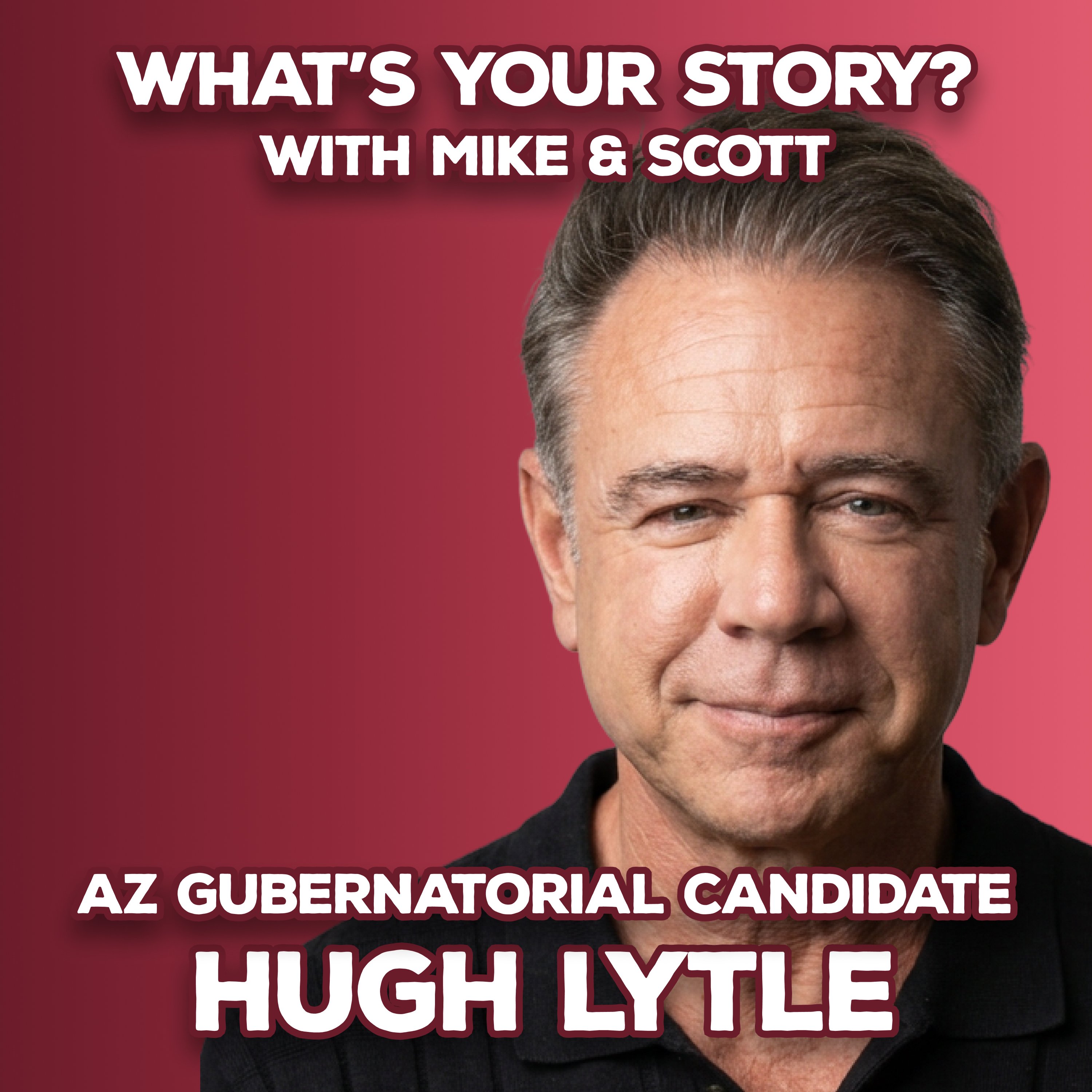
What happens when a former walk-on quarterback who built and sold multiple private-equity-backed companies gets fed up with Arizona’s broken political system and decides to run for governor as a true independent?
Hugh Lytle isn’t your typical politician. He’s a healthcare rebel who transformed entire segments of the industry by fixing what was broken. Now he’s bringing that same “get it done” mindset to Arizona politics — and he’s not asking for permission from either party.
In this episode, Hugh opens up about the brutal legal battles he’s already fought just to stay on the ballot, the realistic math for an independent to actually win in Arizona, and why he believes this is the moment for a real third voice. He also reveals Hugh AI — a digital twin of himself that voters can talk to 24/7.
This is raw, honest, and very different from the usual political interview.
Topics Covered:
- The “walk-on mentality” that shaped his entire career and approach to business
- How he built and scaled major healthcare companies through private equity
- Why he shifted from center-right to center-left after seeing healthcare disparities up close
- The insane legal obstacles independents face in Arizona (and how he’s beating them)
- The realistic path and math for an independent to win the governorship
- His vision to turn Arizona into a global knowledge economy leader
- Launching Hugh AI — a 24/7 digital version of himself for direct voter access
Chapters:
00:00 – Cold open: Hugh’s frustration with two-tier healthcare
01:50 – Welcome Hugh Lytle (our first politician on the show)
03:05 – Is he still the same guy he was growing up?
04:04 – Midwest values, walk-on QB at ASU, and the rebel mindset
07:30 – Why he became a “healthcare rebel” and built massive companies
13:00 – The moment he realized healthcare was broken for entire communities
17:00 – How building companies prepared him for politics
20:00 – Why he’s running as an independent + the brutal legal fights
27:00 – The math for an independent to actually win in Arizona
33:00 – Hugh AI: His 24/7 digital twin for voters
35:00 – Final thoughts + where to follow the campaign
What’s one thing you wish government would actually fix instead of just arguing about? Drop it in the comments 👇
Links:
- Campaign Website: https://hughlytle.com
- Instagram: https://www.instagram.com/hughforgovernor
- X (Twitter): https://x.com/hughforgovernor
- Facebook: https://www.facebook.com/hughforgovernor
- TikTok: https://www.tiktok.com/@hughforgovernor
- YouTube: https://www.youtube.com/@hughforgovernor
Thanks for watching! If this episode moved you, hit LIKE, drop a comment with your biggest takeaway, and SUBSCRIBE for more raw stories, mindset shifts, and real conversations.
New episodes drop every Tuesday morning!
- TikTok: tiktok.com/@whatsyourstorypod_com
- Instagram: instagram.com/whatsyourstorypod_com
- X: x.com/WYSPodcast_com
- Facebook: facebook.com/WhatsYourStoryPod
This episode is sponsored by e3 wealth. If you need someone to help build your financial future, check out their websoite, and tell them Mike & Scott sent you.
Mike's Website: mikelindstrom.com
Scott's Website: scottleeseconsulting.com
NEW WEBSITE! whatsyourstorypod.com
Hugh Lytle:
So Equality Health ended up being a passion project I'm really
Hugh Lytle:
pissed off that we have two tier healthcare system, that people of color
Hugh Lytle:
have their quality of care is much lower than your and my quality care.
Hugh Lytle:
How is that fair in the world we live in today?
Hugh Lytle:
this is 2000 plus, right?
Hugh Lytle:
Why in the hell is this happening?
Hugh Lytle:
So that's why I got fixated on that space, but it ended up turning into a
Hugh Lytle:
very, very large business that helped shape me from being, call it maybe
Hugh Lytle:
more of a Republican and minimum right to center to more left to center.
Hugh Lytle:
Seeing how face to face with poverty, with this large and growing amazing
Hugh Lytle:
Latino community we have that is upwardly mobile, busting their ass, doing all
Hugh Lytle:
the right things as immigrants have.
Hugh Lytle:
And so when former mayor Paul Johnson came to me, he had a healthcare
Hugh Lytle:
company, so I thought we were actually having a meeting about healthcare.
Hugh Lytle:
And he goes, "Yep, you'd never win a primary."
Hugh Lytle:
Intro Band: Lean in closer. This is your time.
Hugh Lytle:
Hit record on your crooked
Hugh Lytle:
life. What's your story?
Hugh Lytle:
(Hey!) Say the words out loud!
Hugh Lytle:
Mike & Scott gonna crack that crowd.
Hugh Lytle:
What's your story? (Hey!) Turn it up, let's go!
Hugh Lytle:
Every voice. Every scar.
Hugh Lytle:
Every road. What's your story?
Hugh Lytle:
Mike and Scott.
Hugh Lytle:
Let's talk.
Scott Leese:
What's up everybody?
Scott Leese:
Welcome to another episode of the What's Your Story podcast.
Scott Leese:
I'm Scott Leese, just came in here to Scottsdale from Austin, Texas with my
Scott Leese:
good friend and co-host Mike Lindstrom.
Mike Lindstrom:
That's me.
Scott Leese:
What's goin' on, buddy?
Mike Lindstrom:
I'm so pumped, man.
Mike Lindstrom:
Do you like, do you like this?
Scott Leese:
We're, we're geared up.
Scott Leese:
We're geared up.
Scott Leese:
USA-
Mike Lindstrom:
250 years!
Mike Lindstrom:
250 years in this country, baby!
Mike Lindstrom:
We've got to celebrate not only FIFA, USA 250, 4th of July, everything's happening.
Mike Lindstrom:
It's amazing.
Scott Leese:
We're ready.
Mike Lindstrom:
We're ready for it.
Mike Lindstrom:
We're ready.
Mike Lindstrom:
We're geared up.
Scott Leese:
Yeah.
Scott Leese:
I'm excited to, welcome our guest, Hugh Lytle, here today.
Scott Leese:
He, is one of the biggest names in the healthcare space, and now he's
Scott Leese:
running here for office here in Arizona.
Mike Lindstrom:
We're talking about a big crossover.
Mike Lindstrom:
he's a very known guy in the healthcare … And I consult in
Mike Lindstrom:
that space, as you well know.
Scott Leese:
Yeah.
Scott Leese:
Yeah.
Mike Lindstrom:
So to be able to say, "Hey, I'm gonna go out there and I'm
Mike Lindstrom:
gonna be a public figure." I just can't wait to dig into that because
Mike Lindstrom:
I believe if we look back in the last 35 episodes or so, we've never really
Mike Lindstrom:
had anybody that was in politics.
Scott Leese:
No, this is our first person.
Scott Leese:
from the
Mike Lindstrom:
political sector.
Scott Leese:
We've had athletes-
Mike Lindstrom:
Yeah.
Mike Lindstrom:
… Scott Leese: people from the news and media-
Mike Lindstrom:
Yeah.
Mike Lindstrom:
… Scott Leese: authors.
Mike Lindstrom:
Yeah.
Mike Lindstrom:
So let's
Scott Leese:
do- But now we're entering politics.
Scott Leese:
We
Mike Lindstrom:
gotta hear his story.
Scott Leese:
So without further ado, welcome to the show, Hugh.
Hugh Lytle:
Thanks for having me.
Scott Leese:
Well, we start everybody off the same way.
Scott Leese:
We wanna know who's the man or who's the woman behind the face,
Scott Leese:
the brand, my first question is if people who've known you your whole
Scott Leese:
life, what would they say are you the same as you were when you were young?
Scott Leese:
Have you changed quite a bit?
Scott Leese:
Who is Hugh?
Scott Leese:
What's the story behind the man?
Hugh Lytle:
100% same guy.
Hugh Lytle:
that is just, both, a good thing, on one hand and the other
Hugh Lytle:
thing, maybe not a good thing.
Hugh Lytle:
But, but yeah, I'm the, I'm the same guy.
Hugh Lytle:
always have … I've learned early, I had a, a well-known father, iconic guy
Hugh Lytle:
in healthcare, that was my dad and, always taught me about, managing the ego.
Hugh Lytle:
Ego, e- ego's a killer in your life.
Hugh Lytle:
You let the ego if it gets in front of you, it can, ruin the
Hugh Lytle:
greatest things in the world.
Hugh Lytle:
And so I've always, even in my successes I've had, tried to stay
Hugh Lytle:
attuned to that and stay grounded and then, because you have failures too.
Hugh Lytle:
So it's that trying to be one degree above or below at any point in time in
Hugh Lytle:
that, straight line of life of, trying to maintain, emotional intelligence
Hugh Lytle:
and, not get carried away with yourself, that's always been an important thing.
Hugh Lytle:
So yeah, I, you mentioned politics before.
Hugh Lytle:
It's, really weird to hear that I'm in politics so-
Scott Leese:
Yeah.
Scott Leese:
… Hugh Lytle: to say that I'm your first politician-
Scott Leese:
It's a new association for you.
Scott Leese:
Yeah.
Mike Lindstrom:
It's an identity.
Mike Lindstrom:
It's an identity shift.
Hugh Lytle:
Yeah.
Hugh Lytle:
But that's how people … I think people would tell me
Hugh Lytle:
I'm pretty much the same guy.
Scott Leese:
Yeah.
Scott Leese:
And you grew up in Indiana, yeah?
Hugh Lytle:
Yeah.
Hugh Lytle:
Midwestern values, Indianapolis, Indiana.
Hugh Lytle:
I was born in, Port Smith, Arkansas.
Hugh Lytle:
I went to … My father was 18 years old when he had me.
Hugh Lytle:
My mom was 17.
Hugh Lytle:
Wow.
Hugh Lytle:
they moved to, Greenville, Texas where they're from originally and, I grew up
Hugh Lytle:
till I was about, you know, young, five, six years old in Greenville and then
Hugh Lytle:
moved from Texas to Indiana, because my dad had early success in healthcare.
Hugh Lytle:
So, gave us an opportunity to go there and, was in Indiana
Hugh Lytle:
up until I went to Arizona.
Scott Leese:
Wow.
Mike Lindstrom:
So was healthcare like your destiny because of your father?
Hugh Lytle:
Yeah, like every kid, I didn't want anything.
Hugh Lytle:
I didn't do anything my father was doing, right?
Hugh Lytle:
And healthcare sounded so ridiculously boring.
Hugh Lytle:
I couldn't imagine a career in it.
Hugh Lytle:
no, I wanted to be a quarterback, NFL quarterback or an astronaut.
Hugh Lytle:
And I was too big for an astronaut still fascinated by astronomy, but, being an NFL
Hugh Lytle:
quarterback is every kid's dream, right?
Hugh Lytle:
So, had a lot of football success in high school, so thought
Hugh Lytle:
maybe I'd take that chance.
Hugh Lytle:
And back when I played, it was, you had to be Pac-10 or Big 10 to make to the NFL.
Hugh Lytle:
You, couldn't come from Portland State and make it to the NFL because
Hugh Lytle:
that's just not how the recruiting worked and there were sometimes
Hugh Lytle:
that would happen, but very rarely.
Hugh Lytle:
so, yeah, that's what ended up pulling me to Arizona was, we won three state
Hugh Lytle:
championships in a row my sophomore, junior and senior year, quarterback of
Hugh Lytle:
those teams and, had the opportunity to go, to Midwestern schools, which,
Hugh Lytle:
weren't that exciting to me at the time.
Hugh Lytle:
Indiana now who ironically wins the national champ- which is mind numbing,
Hugh Lytle:
considering that was a basketball school.
Hugh Lytle:
Bobby Knight basketball, the football had zero.
Hugh Lytle:
That was the school interested in me.
Hugh Lytle:
You know, schools like that, that I just wasn't, an old Wisconsin or Michigan state
Hugh Lytle:
that wasn't quite what they are today.
Hugh Lytle:
So, sent films out west and ended up going to, ASU and UCLA to
Hugh Lytle:
try out and ASU was the, choice.
Scott Leese:
Yeah.
Scott Leese:
I wanna dig in on that a little bit because if I have this story
Scott Leese:
right, you walked on at ASU.
Scott Leese:
Yeah.
Scott Leese:
Is that right?
Hugh Lytle:
Yep.
Scott Leese:
Talk a little bit about the mentality of somebody who's, walking on.
Scott Leese:
You're not a scholarship player.
Hugh Lytle:
Yeah.
Scott Leese:
You're not guaranteed to-
Hugh Lytle:
Yeah.
Scott Leese:
…even be on the roster to get to practice, anything like that.
Hugh Lytle:
Right.
Hugh Lytle:
And you're, in a position like quarterback.
Hugh Lytle:
It's not like-
Scott Leese:
Right.
Hugh Lytle:
…walking on as a-
Scott Leese:
Yeah.
Hugh Lytle:
…lineman or a linebacker or something, you know?
Hugh Lytle:
yeah, it was, again, going back to the dream, it was, that's the dream.
Hugh Lytle:
And I knew I had to hit that level to have a chance and, you know, in retrospect at
Hugh Lytle:
this age, I wish I would've gone to like a NAU or something and probably thrown the
Hugh Lytle:
ball 70 times a game and had a great time.
Scott Leese:
Yeah.
Hugh Lytle:
But instead I felt like I needed to do that
Hugh Lytle:
to get to that next level.
Hugh Lytle:
but yeah, the mindset was, you know, I knew I could throw the ball well.
Hugh Lytle:
I mean, that was, I had a really strong arm, so that part
Hugh Lytle:
didn't, wasn't the concern.
Hugh Lytle:
When it comes down to quarterbacking, it really comes down to, amount of pla-
Hugh Lytle:
playing time you have that, that's super important at the level you're playing at.
Hugh Lytle:
and then it comes down to, really understanding, recognizing defenses and,
Hugh Lytle:
and understanding the dynamics that in that moment, things happen super fast.
Hugh Lytle:
So going from high school to ASU was significantly different in the speed of-
Scott Leese:
Yeah.
Hugh Lytle:
…the people-
Mike Lindstrom:
Yeah.
Hugh Lytle:
…the complexity of the defenses that would, the ability to hide
Hugh Lytle:
schemes where you thought, okay, this is gonna be a corner blitz for sure.
Hugh Lytle:
Now he's gonna be open and then they drop out of the corner
Hugh Lytle:
blitz and you're like, oh, crap.
Hugh Lytle:
And then you pick, throw the ball and recept into a linebacker you're
Hugh Lytle:
like, "Oops." So these kind of things, came up on me very, very fast.
Hugh Lytle:
but, but the mindset to your question was, I can do anything.
Hugh Lytle:
I mean, that's just how I've always felt like,
Scott Leese:
Yeah.
Scott Leese:
… Hugh Lytle: I think, I believe there's so much potential in humans in general.
Scott Leese:
I think people have so much greatness in them if they could ever listen
Scott Leese:
to that inner voice and follow it.
Scott Leese:
And even if you don't get there, it's still a life well lived, I believe-
Scott Leese:
Yeah.
Hugh Lytle:
…you know, optimizing yourself to the best you can.
Scott Leese:
I, think this is a, really interesting and great thread that you
Scott Leese:
have throughout your life and your career.
Hugh Lytle:
Yeah.
Scott Leese:
this walk on kind of mentality, you've called
Scott Leese:
yourself a healthcare rebel-
Hugh Lytle:
mm-hmm.
Hugh Lytle:
… Scott Leese: RIght?
Hugh Lytle:
Mm-hmm.
Scott Leese:
That's long odds, underdog kind of story.
Hugh Lytle:
Mm-hmm.
Scott Leese:
I think a lot of people relate to that.
Scott Leese:
I at least- Yeah.
Scott Leese:
… relate to that.
Scott Leese:
It seems like that's kind of an arc that has been consistent in your life.
Scott Leese:
It
Hugh Lytle:
is.
Hugh Lytle:
you know, it's funny because that's one of the things that I always talk
Hugh Lytle:
about is that I, for, as a friend of mine who pointed out, I didn't
Hugh Lytle:
even notice that pattern actually.
Hugh Lytle:
I just was who I am, you know, and, a, a buddy of mine, I was maybe 40
Hugh Lytle:
years old, said, " You know, Lydil, you goes, you're such a rebel, man.
Hugh Lytle:
You're such a … You always go for the underdog.Like if it's
Hugh Lytle:
Alabama's plan, I'm interested in anybody who's gonna beat Alabama."
Scott Leese:
Yeah, so am I. I, I'm in Austin, Texas.
Scott Leese:
Yeah.
Scott Leese:
Anybody in Alabama.
Mike Lindstrom:
That's kinda
Hugh Lytle:
true.
Hugh Lytle:
But nothing against Alabama's program and congratulations for all their success,
Hugh Lytle:
but I, I want the underdog to win.
Hugh Lytle:
I wanna see, new energy coming in.
Hugh Lytle:
Yeah.
Hugh Lytle:
I wanna see a, a change.
Hugh Lytle:
I don't like status quo.
Hugh Lytle:
And I'm a big … I've said this before, but I really, I hate bad rules.
Hugh Lytle:
when you're coming up in life-
Scott Leese:
Yeah.
Scott Leese:
… Hugh Lytle: just deal with things where you're like, why
Scott Leese:
aren't we doing this, right?
Scott Leese:
Bureaucracy for bureaucracy's sake.
Scott Leese:
And that part of me is a big … That's what drove the career ultimately.
Scott Leese:
I was like, healthcare is so broken-
Scott Leese:
mm-hmm.
Hugh Lytle:
in so many places that, I don't wanna just create a new widget in
Hugh Lytle:
healthcare I wanna do systemic change.
Hugh Lytle:
I wanna change an entire segment of how they operate and how they think.
Hugh Lytle:
And I've been able to do that three times and that was, from truly
Hugh Lytle:
being able to believe and bet on yourself and say, "You know what?
Scott Leese:
Yeah.
Hugh Lytle:
I know, and this is what I say even about politics today.
Hugh Lytle:
I'm really, really dangerous when I have right on my side and I know
Hugh Lytle:
I've got right on my side with how we, where we are politically.
Hugh Lytle:
I know we'll talk about that a little bit later.
Hugh Lytle:
But, and I knew in the segments of healthcare I went into, like, in
Hugh Lytle:
prevention and wellness, the first segment that we transformed, that we
Hugh Lytle:
were paying for sick care at the time.
Hugh Lytle:
It was all about sickness.
Hugh Lytle:
It was nothing about how do we keep people healthy.
Hugh Lytle:
Now we take that for granted because wellness has become a massive industry,
Hugh Lytle:
but when we s- we basically were on the front end of this thing in the late '90s,
Hugh Lytle:
early 2000s and helped build the first kind of scale prevention and wellness
Hugh Lytle:
platform that health plans could offer as a benefit to their memberships.
Hugh Lytle:
That's how it got to millions of people.
Scott Leese:
Mm-hmm.
Hugh Lytle:
but putting that together, we had to define what are the
Hugh Lytle:
modalities of wellness, you know?
Hugh Lytle:
So, we had stress and depression management, smoking cessation, fitness
Hugh Lytle:
and nutrition, you know, complimentary alternative medicine, another huge piece.
Hugh Lytle:
So these kind of things, when you're transforming something,
Hugh Lytle:
they scratch that inner itch of-
Scott Leese:
Yeah.
Hugh Lytle:
of rebellion and doing things different and-
Scott Leese:
And positive.
Hugh Lytle:
And positive-
Scott Leese:
Impact and what-not.
Scott Leese:
… Hugh Lytle: I'm one of those people who-
Scott Leese:
Yeah.
Scott Leese:
… Hugh Lytle: truly, if you're telling me I can't do it, I get that much-
Scott Leese:
Yeah.
Hugh Lytle:
more more locked in.
Scott Leese:
Sure.
Hugh Lytle:
And that's huge as I'm running as an independent in a time
Hugh Lytle:
when people act like, how dare you?
Hugh Lytle:
what do you mean how dare me?
Hugh Lytle:
We got 30% of the electorate that are independents.
Hugh Lytle:
I've got right on my side here.
Hugh Lytle:
People are dissatisfied with the two party system, there's time for a voice.
Hugh Lytle:
that's really interesting that that is exactly the pattern that I followed-
Scott Leese:
Yeah.
Scott Leese:
… Hugh Lytle: that turned into just a bigger, platform here.
Mike Lindstrom:
Midwest Values, you talked about that.
Mike Lindstrom:
What were some of the things that you remember that you would go
Mike Lindstrom:
back to now and say, "You know, I remember when my dad taught me this.
Mike Lindstrom:
The things that still guide you-
Hugh Lytle:
Yeah.
Mike Lindstrom:
…things you were taught, things that you grew up with?
Hugh Lytle:
There's simple memories like, we lived out in the, we were in a
Hugh Lytle:
rural side of Indianapolis and then we lived on this kind of quasi farm, I would
Hugh Lytle:
call it little, five acre type thing.
Hugh Lytle:
And, but we had horses, dogs, cats and everything and we had to, do chores,
Hugh Lytle:
I had to get up a four in the morning, break the ice out of the buckets and,
Hugh Lytle:
water the horses and give them their protein powder, feed them all that, clean
Hugh Lytle:
the stalls on the weekend, spread the manure, I had a couple labs and take my
Hugh Lytle:
labs back and go to Buck Creek, which was back behind my house, but I had to cross
Hugh Lytle:
three or four cornfields to get to it.
Hugh Lytle:
So it's, I did, it's picturesque now when I think about it at the time, I was
Hugh Lytle:
like, "Why don't I get a little closer to school and be with all my friends?"
Hugh Lytle:
You know, I was angry about it, right?
Hugh Lytle:
But when I went down there, I would go and I would fish in the creek and I would
Hugh Lytle:
walk through the middle of the creek
Hugh Lytle:
But what I found is it was basically cathartic and an ability to be alone and
Hugh Lytle:
think and think big and think creatively and that really was a good foundation
Hugh Lytle:
for, these Midwestern … And then, with the football success, there's a
Hugh Lytle:
bunch of strong farm boys solid salt of the earth guys I grew up with.
Hugh Lytle:
So having, like … And then we did move across the street
Hugh Lytle:
from high school eventually.
Hugh Lytle:
So, when football and, and high school started.
Hugh Lytle:
So I had, 18 close friends.
Hugh Lytle:
It was like a frat house, you know, literally across the street that we
Hugh Lytle:
were always out throwing the ball, hanging out together, but it was,
Hugh Lytle:
obviously high jinks too at times.
Hugh Lytle:
But, but most of it was, really just, conversations, discipline, we had a very
Hugh Lytle:
disciplined football program, setting goals and trying to achieve goals.
Hugh Lytle:
Those were the things that, I think are really big in the Midwest and are big,
Hugh Lytle:
big everywhere now, I guess, but, but certainly things that I picked up on.
Hugh Lytle:
And, spirituality is important too and spirituality is, pretty strong in that,
Hugh Lytle:
in that area I grew up in as well.
Mike Lindstrom:
Yeah.
Mike Lindstrom:
who were some of the big influences outside of family?
Mike Lindstrom:
when you were on the come up, say college, you're getting into your career,
Mike Lindstrom:
healthcare speakers, I came from the Tony Robbins camp when I was out of law school.
Mike Lindstrom:
Tony Robbins big influence on me, for example, who were some of
Mike Lindstrom:
those people in your career life that when you were on the come up?
Hugh Lytle:
You know, I would start the first one with my high
Hugh Lytle:
school football coach, ironically.
Hugh Lytle:
he was like my second father.
Hugh Lytle:
He was, different than my father.
Hugh Lytle:
My father was a very big thinker.
Hugh Lytle:
you know, I, I describe him sometime like an European intellectual.
Hugh Lytle:
Like he is, knows everything about history, is a brilliant guy.
Hugh Lytle:
and then my coach is very, pragmatist.
Hugh Lytle:
he's in the dirt, five yards in the cloud of dust.
Hugh Lytle:
Why would we ever throw the ball back shut up?
Hugh Lytle:
You know, like, what, what do you mean?
Hugh Lytle:
Please let me throw the ball.
Hugh Lytle:
but, he was a real big influence in my life because he, I really respected
Hugh Lytle:
him and how he managed this group of men that were strong in personality
Hugh Lytle:
and strong in who they were and, and he managed to make us a team.
Hugh Lytle:
So watching how he operated was huge.
Hugh Lytle:
And I still use a lot of these same football principles today, and leadership.
Hugh Lytle:
I say often that I've learned everything I ever needed to learn in the huddle,
Hugh Lytle:
because as a QB, you gotta know every position, what every position does on any
Hugh Lytle:
given play one of the things that hurt me early in my career was I wasn't able
Hugh Lytle:
to let go, fire people early because we were only as good as our weakest guy.
Hugh Lytle:
That was what they teach you in football.
Hugh Lytle:
So firing someone wasn't and it was like, how do we make that person the best
Hugh Lytle:
they can be, even if it's not strong, doesn't work that way in business.
Hugh Lytle:
You have to, perform and, do things different.
Hugh Lytle:
But, I think that was probably the biggest influence.
Hugh Lytle:
on a public basis, it was more, this was the, Cold War era, right?
Hugh Lytle:
So for me, Ronald Reagan was a bigger than life figure, Top Gun, Tom Cruise,
Hugh Lytle:
there were so many cool things.
Hugh Lytle:
Back then, we didn't know these stars personalities we just knew-
Mike Lindstrom:
Yeah.
Hugh Lytle:
you know, we knew what they stood for from the movies, but that
Hugh Lytle:
was probably, those kind of people.
Hugh Lytle:
There were no … I didn't have any, authors or single kind of
Hugh Lytle:
threaded influence outside of pop culture, that I followed.
Hugh Lytle:
But, early in my life it was my father.
Hugh Lytle:
It was my high school coach and, probably Ronald Reagan in terms of, being inspired.
Mike Lindstrom:
Was there any part of you back then that you said, one
Mike Lindstrom:
day I'm gonna go into politics."
Hugh Lytle:
Oh, not at all.
Hugh Lytle:
Wasn't even … Matter of fact, that's, that you could … Mike,
Hugh Lytle:
you could bring that all the way up until I was asked about
Scott Leese:
[laughing]
Hugh Lytle:
January of this year.
Hugh Lytle:
So, I've never, thought about public office.
Hugh Lytle:
I'm very community centered.
Hugh Lytle:
My businesses have a lot of impact and thought about the community, but, I've
Hugh Lytle:
always thought about from a business perspective, never thought about
Hugh Lytle:
it from a, government perspective.
Hugh Lytle:
And, a part of that has just been the dysfunction of government, as a whole.
Hugh Lytle:
we live in the greatest country on the planet and, and the greatest
Hugh Lytle:
state, I believe, on the planet.
Hugh Lytle:
So, those opportunities kind of came together and vectored into this
Hugh Lytle:
decision, but it's not part of my
Scott Leese:
So do you just then feel compelled to try to
Scott Leese:
fix things that are busted?
Hugh Lytle:
Totally.
Scott Leese:
You talked about fixing things in healthcare that were-
Hugh Lytle:
Yeah.
Hugh Lytle:
… Scott Leese: broken and busted and how you like being on the side of right.
Hugh Lytle:
I can imagine back then you're looking at healthcare and you're like, "This
Hugh Lytle:
is wrong. I'm compelled to fix this."
Hugh Lytle:
Did you find yourself a litle bit in that position in January and for the
Hugh Lytle:
last few months where you're like-
Hugh Lytle:
Yeah.
Scott Leese:
…this stuff is busted, I can fix it?
Hugh Lytle:
it was a process, I would tell you that, on the decision to run, but I
Hugh Lytle:
would tell you just in general, when I thought about business and healthcare,
Hugh Lytle:
and again, all the businesses, I've had are, have been private equity backed
Hugh Lytle:
at some level, New York private equity-
Scott Leese:
Yeah.
Hugh Lytle:
not, local yokel stuff.
Hugh Lytle:
so these are serious players, right?
Hugh Lytle:
These are Harvard NBAs at their highest financial engineers at the highest level.
Hugh Lytle:
and the first two businesses I built were what they call LBO style leveraged
Hugh Lytle:
buyout, meaning we set the thesis up here.
Hugh Lytle:
Here's what we wanna do.
Hugh Lytle:
We wanna create an entire prevention and wellness platform, and then we think
Hugh Lytle:
it's gonna take X amount of capital.
Hugh Lytle:
They deliver hundreds of millions of dollars of capital and then we go out
Hugh Lytle:
and acquire best of breeds companies in these five disciplines and we put
Hugh Lytle:
them together, integrate them, scale them, and then exit that business.
Scott Leese:
Yeah.
Hugh Lytle:
in that world, you have to perform.
Hugh Lytle:
it's like a football business.
Hugh Lytle:
It's quarter to quarter in a lot of ways, more scrutinized in public
Hugh Lytle:
companies because you don't have public and a few analyst calls to deal with.
Hugh Lytle:
You've got some of the smartest people on the planet at business that can
Hugh Lytle:
see everything, everything you do.
Hugh Lytle:
And any move you should be doing.
Hugh Lytle:
so that, 40% CAGR minimum a year you need to grow at.
Hugh Lytle:
you gotta return minimum 400% return on invested capital in four years.
Hugh Lytle:
and you gotta transform an entire industry in that timeframe, right?
Hugh Lytle:
and build teams and do all the things that you would do-
Scott Leese:
Piece of cake!
Hugh Lytle:
Piece of cake, right?
Hugh Lytle:
So that is a daunting thing and, these are all large scale businesses that I built.
Hugh Lytle:
And so, when the opportunity came … So I like that, first of
Hugh Lytle:
all, mental chess game of fixing something really broken in healthcare.
Hugh Lytle:
Did it in prevention wellness, integrated home care, my last one, Equality Health,
Hugh Lytle:
which was more of a, local visible business here because we're now in
Hugh Lytle:
seven states, but that was a process of, getting better and better at what I do.
Hugh Lytle:
So Equality Health ended up being a kitchen table startup, a passion project
Hugh Lytle:
where the other two were, we're gonna go fix these two segments of industry.
Hugh Lytle:
The kitchen table startup was, I'm really pissed off that we have two
Hugh Lytle:
tier healthcare system, that people of color have more disparate outcomes than
Hugh Lytle:
people that are not of color and they don't have near the quality or access.
Hugh Lytle:
their quality of care is much lower than your and my quality care.
Hugh Lytle:
How is that fair in the world we live in today?
Hugh Lytle:
this is 2000 plus, right?
Hugh Lytle:
Why in the hell is this happening?
Hugh Lytle:
So that's why I got fixated on that space, but it ended up turning into a
Hugh Lytle:
very, very large business that I had no idea would scale that large at the time.
Hugh Lytle:
But, that helped shape me from being, call it maybe more of a
Hugh Lytle:
Republican and right minimum right to center to more left to center.
Hugh Lytle:
Seeing how poverty direct face to face with poverty, with this large and growing
Hugh Lytle:
amazing Latino community we have that is upwardly mobile, busting their ass, doing
Hugh Lytle:
all the right things as immigrants have.
Hugh Lytle:
And the, just as the Irish and Catholics have done- Yeah.
Hugh Lytle:
… Irish in the, Italians have done in the early days, but like getting
Hugh Lytle:
no respect for it and, because they came from the fields and it's like,
Hugh Lytle:
"Hey, stop, this is ridiculous.
Hugh Lytle:
We need to step this up." So, that really helped blend me as a person
Hugh Lytle:
and so when the opportunity came for this, when, former mayor Paul
Hugh Lytle:
Johnson came to me, and said, "Hey, I thought he, he had a healthcare
Hugh Lytle:
company, so I thought we were actually having a meeting about healthcare.
Hugh Lytle:
he brought a few guys with him and all of a sudden it would turn into,
Hugh Lytle:
we would like you to run for governor.
Hugh Lytle:
And he goes, "I know you're an independent and, but I'm gonna test that.
Hugh Lytle:
" So being Paul Johnson, if you know him, he started whipping through
Hugh Lytle:
everything from reproductive riots to gun control to, you name the topic
Hugh Lytle:
and just trying to see where I land.
Hugh Lytle:
And he goes, "Yep, you'd never win a primary." So I wasn't extreme
Hugh Lytle:
enough right or left that, he knew that I was the right guy for it.
Hugh Lytle:
So anyways, but for me, ultimately what, I won't take you through with
Hugh Lytle:
the whole process, but ultimately it took me a little bit to get there, but
Hugh Lytle:
what I finally came down to was it's just taking the same model I had done
Hugh Lytle:
from a performance perspective, from a re-engineering perspective and saying,
Hugh Lytle:
why not take those skills and put that into something that is a larger calling,
Hugh Lytle:
and do it for a larger group of people where everybody in the state can benefit.
Hugh Lytle:
Well, I'll give me one example of Equality Health where I did
Hugh Lytle:
something that was unusual.
Hugh Lytle:
we had a LLC, you know, a typical, for profit business,
Hugh Lytle:
supporting Medicaid patients.
Hugh Lytle:
But I realized that we had about 20, 25% of Access Medicaid on our
Hugh Lytle:
program at any point in time, okay?
Hugh Lytle:
So 250, 300,000 people, in Arizona, and I'm going, "Okay, but what about
Hugh Lytle:
all the people that don't, that aren't our clients? They don't get a benefit
Hugh Lytle:
from this quality of care initiative, right? So how could we fix that?" So we
Hugh Lytle:
put a 501c-3 and wrapped it around it.
Hugh Lytle:
So I had a not-for-profit side too that allowed us to work with community
Hugh Lytle:
partners to go out and bring some of our capabilities out to a bigger audience.
Hugh Lytle:
Now, private equity guys, not in love with that idea, right?
Hugh Lytle:
we're doing public good, okay?
Hugh Lytle:
This is a good thing to do.
Hugh Lytle:
and so that became the same concept I might think about government.
Hugh Lytle:
why am I only benefiting people in healthcare?
Hugh Lytle:
Why can't I benefit people across a broader spectrum?
Hugh Lytle:
and as you know just looking at, government, there's a lot of
Hugh Lytle:
things we could improve and fix.
Hugh Lytle:
So-
Mike Lindstrom:
Yeah, it's, the independent route is not an easy route.
Hugh Lytle:
Yeah.
Mike Lindstrom:
I mean, you had to go through some legal battles.
Mike Lindstrom:
Can you talk about that a little bit?
Hugh Lytle:
Yeah.
Mike Lindstrom:
'Cause I read up on that a little bit, when we
Mike Lindstrom:
first initiated with your team.
Hugh Lytle:
Yeah.
Mike Lindstrom:
and I'm a lawyer by, education, I was looking at the stuff
Mike Lindstrom:
and I'm like, hmm, every state's different obviously, but There's two
Mike Lindstrom:
different battles, not just the legal system, but then actually getting to
Mike Lindstrom:
the point of, potentially winning.
Hugh Lytle:
Yeah.
Hugh Lytle:
Yeah.
Mike Lindstrom:
So talk about that a litle bit.
Hugh Lytle:
Yeah.
Hugh Lytle:
So certainly easier pass, right?
Hugh Lytle:
but that's, going back to what you said that's not my DNA, you know, my DNA is-
Scott Leese:
Yeah, that's what, you got that walk on mentality.
Hugh Lytle:
That's actually what my son said to me, that really got
Hugh Lytle:
me over the hump is he said, "Dad, this is the kind of stuff you do.
Hugh Lytle:
This is your brand." Yeah. He goes, "You like hard things.
Hugh Lytle:
You like doing tough stuff." And so I want my son to respect that and, see
Hugh Lytle:
it on a bigger platform and if he's pushing me, then that tells me a lot.
Hugh Lytle:
so going as an independent, as you know, haven't had a viable
Hugh Lytle:
independent in 40 years, right?
Mike Lindstrom:
Yeah.
Hugh Lytle:
So that was one of the big things.
Hugh Lytle:
I'm going, okay, lots changed since then.
Hugh Lytle:
and that was probably one of the biggest decisions was how divisive politics
Hugh Lytle:
have got, how pathetic it's got.
Mike Lindstrom:
Yeah.
Hugh Lytle:
I mean, how we're name calling and-
Mike Lindstrom:
Oh, it's ridiculous.
Hugh Lytle:
It's just, I think everybody knows that.
Hugh Lytle:
The question is, can they be brave enough to say, "You know what?
Hugh Lytle:
I'm gonna take this election and on this election, I'm gonna try something
Hugh Lytle:
Maybe I don't completely love this guy, but he's worth a shot over what we
Hugh Lytle:
already know we're gonna get otherwise." That's the ultimate, calling here.
Hugh Lytle:
But as I started in this process, obviously it's incredibly threatening
Hugh Lytle:
to an incumbent governor, that's been primarily the Democratic operatives
Hugh Lytle:
that have been going after me legally, not that the Republicans didn't have
Hugh Lytle:
something to do with the party name at first either, but I think the way I would
Hugh Lytle:
summarize it and give a couple details to what you said is that independents
Hugh Lytle:
are now 30% of the electorate.
Hugh Lytle:
We're larger than the Republican Party or the Democratic Party in the state of
Hugh Lytle:
Arizona and that number is growing, right?
Hugh Lytle:
They are, people are becoming more and more disenfranchised with the system.
Hugh Lytle:
They historically, because of that very dynamic, set a ballot, signature
Hugh Lytle:
threshold, which by the way, come being outside politics, coming in,
Hugh Lytle:
ballot signature is not easy to get.
Hugh Lytle:
I mean, that is not a simple thing.
Hugh Lytle:
You think, oh, a thousand, 2,000, that's big, it's hard to get, think
Hugh Lytle:
of your own, list of people you know.
Mike Lindstrom:
Yeah.
Hugh Lytle:
You go sign something for me for a thousand people, like-
Mike Lindstrom:
Yeah.
Hugh Lytle:
…that's a lot of people.
Mike Lindstrom:
Yeah.
Hugh Lytle:
5,000 signatures for a Democrat or five or 6,000,
Hugh Lytle:
five or 6,000 for a Republican, 45,000 if you're an independent-
Scott Leese:
Yeah, 9x the size.
Scott Leese:
Yeah.
Hugh Lytle:
Impossible.
Hugh Lytle:
r- virtually impo- I mean, you can do it, it would take a long time.
Hugh Lytle:
You have to be do- prepar- prayering that for a very … And very expensive,
Hugh Lytle:
by the way, to do as well, because you have to pay for a lot of this.
Hugh Lytle:
then, Paul offers this party that they commandeered called No Labels Nationally.
Hugh Lytle:
It was national.
Hugh Lytle:
They set up 50 states, big, enough people to create a party.
Hugh Lytle:
it was, done to run someone against Biden Trump, never materialized.
Hugh Lytle:
So they, Paul and team took over No Labels Arizona.
Hugh Lytle:
So we had a party that put me at like a 2,000 threshold, of signature.
Hugh Lytle:
So having fair ballot access as an independent was, was enormous, right?
Hugh Lytle:
So I said, "Okay, that's interesting." ended up getting 6,000 signatures,
Hugh Lytle:
but of course was challenged on those signatures, on that.
Hugh Lytle:
and then early on we, they had changed the name from No Labels
Hugh Lytle:
Arizona to Arizona Independent Party.
Hugh Lytle:
Again, another threatening thing, just like the signature thing that they,
Hugh Lytle:
called, just like before, they called a special session of the legislature, to
Hugh Lytle:
make sure that they could build into the Constitution that we could never have the
Hugh Lytle:
name independent in our party, which, you know, were challenging in appellate court.
Hugh Lytle:
But, really, this is the kind of stuff, right?
Hugh Lytle:
We have water crisis, we've got education crisis, but let's focus on this group of
Hugh Lytle:
40,000 people out of 4.4 million voters.
Hugh Lytle:
and so that's, you know, traditional politics and you got all their silly
Hugh Lytle:
talking points, but at the end of the day, I, I think people are smarter than that.
Hugh Lytle:
So that was challenged.
Hugh Lytle:
And then the final one was my campaign made a clerical error and put my PO
Hugh Lytle:
box that I've got my mail at for 15 years, instead of my street address
Hugh Lytle:
and they kicked it out and said, "On a technicality, you can't do that,
Hugh Lytle:
right?" So the judges looked at it, well, wait a minute, he's running
Hugh Lytle:
for statewide office and his mailbox is like five miles from his home.
Hugh Lytle:
Like, this doesn't make any sense.
Hugh Lytle:
And they challenged it again, they lost in trial court, but then they challenged it.
Hugh Lytle:
We're gonna go to appellate, but we had a time pressure on getting ballots
Hugh Lytle:
printed, so we decided both of us to go ahead and go straight to Supreme
Hugh Lytle:
Court, Supreme Court ruled in our favor.
Hugh Lytle:
as you might surprise, we had case law on our- Yep.
Hugh Lytle:
… on our side as well.
Hugh Lytle:
But either way, the point is let's make it difficult.
Hugh Lytle:
And they also caused me to have to spend a lot of money, to do that.
Hugh Lytle:
Yeah.
Hugh Lytle:
And I'm self-funding the majority of my campaign right now.
Mike Lindstrom:
do you ever stop and think, there's a word enoughness.
Mike Lindstrom:
I know it's not technically a word, enoughness.
Mike Lindstrom:
When's enough enough?
Mike Lindstrom:
Like, do you really wanna put up with all this BS?
Mike Lindstrom:
It's like, man, I've, had a good life, I've been an executive, I
Mike Lindstrom:
can do all these different things.
Hugh Lytle:
Yeah.
Mike Lindstrom:
There's gotta be a certain level where you go, man- is
Hugh Lytle:
this worth it?
Hugh Lytle:
Is
Hugh Lytle:
this
Hugh Lytle:
worth it?
Hugh Lytle:
I mean, I do have a great life without politics and that's why hopefully people
Hugh Lytle:
can appreciate that when, when the reason I'm running is that a lot of people
Hugh Lytle:
have great lives and a lot of reasons they don't wanna go into politics, but,
Hugh Lytle:
this has zero to do with ego, I've had my name, name in lights all my life.
Hugh Lytle:
I, I don't need more Hugh Lytle.
Hugh Lytle:
Matter of fact, it's weird to be the product and see my name.
Hugh Lytle:
I'm like, enough of that.
Hugh Lytle:
Seen my face way too many times, but-
Mike Lindstrom:
I saw you on the way here to the office.
Mike Lindstrom:
You're right on the phone.
Hugh Lytle:
It's like, "Ugh, come on." but, it goes back
Hugh Lytle:
to what we were saying before.
Hugh Lytle:
I mean, there's a need here, there's a calling, there's a gap that needs to
Hugh Lytle:
be filled and, I thought long and hard and about, you know, I'm, I, I wanna
Hugh Lytle:
feel like I lived a purpose-driven life.
Hugh Lytle:
I was at that point where, like, maybe I retire, was looking at starting a fourth
Hugh Lytle:
business and I'm like, I don't know, like, is this the right thing to do?
Hugh Lytle:
and, you know, a lot of people around me, very supportive saying, "You know what?
Hugh Lytle:
Being one could pull this stuff off, it'd be you.
Hugh Lytle:
so I, think to me, the most important thing is that there's a voice here, you
Hugh Lytle:
And whether I make it over and get elected or not, that you can't deny people.
Hugh Lytle:
I heard, a consultant say that in- independents are there
Hugh Lytle:
to moderate the two parties.
Hugh Lytle:
Like, we're just observers that are there to, golf clap when something happens
Hugh Lytle:
and I'm going, "Please, you know, for God's sakes, I think, most moderates are
Hugh Lytle:
We represent the middle.
Hugh Lytle:
We represent common sense." And, I think it's gotten so extreme to this point now
Hugh Lytle:
that people either they look at it as a fantasy world, it doesn't really affect
Hugh Lytle:
them till it starts to affect them.
Hugh Lytle:
And lately, that started to affect.
Hugh Lytle:
Affordability-
Mike Lindstrom:
Yeah.
Mike Lindstrom:
… Hugh Lytle: is affecting people.
Mike Lindstrom:
And that starts getting real.
Mike Lindstrom:
Your government gets real at that point and that's why I
Mike Lindstrom:
think what I'm doing matters.
Scott Leese:
It starts to activate the public a litle bit.
Scott Leese:
Mm-hmm.
Scott Leese:
People who maybe were, lasseiz faire about it, didn't care that much.
Scott Leese:
All of a sudden it starts to affect them.
Scott Leese:
They're like, hmm.
Hugh Lytle:
Right.
Scott Leese:
Maybe I should pay attention suddenly.
Scott Leese:
Right.
Hugh Lytle:
Well, like, you know, gas is shooting through the roof and
Hugh Lytle:
they're going, "Well, wait, couldn't we just, like, maybe temporarily
Hugh Lytle:
halt the gas tax for a little bit?".
Hugh Lytle:
I mean, wouldn't that be some way to help me, right?
Hugh Lytle:
and I also think there's just this dynamic with, career politicians.
Hugh Lytle:
So back to what you were saying about just what I'm doing, I think
Hugh Lytle:
more citizens, there's so much talent in the private sector.
Hugh Lytle:
I mean, I wish more citizens would step forward.
Hugh Lytle:
This hopefully is a pathway to do that-
Scott Leese:
Yeah.
Hugh Lytle:
…where you can have fair ballot access, but we've
Hugh Lytle:
gotta find a way and maybe it isn't that we need three parties.
Hugh Lytle:
Maybe we just need two parties, but we gotta have a way to get them
Hugh Lytle:
rowing in the same direction and have bipartisanship again and, public discourse
Hugh Lytle:
without hating your neighbor, right?
Mike Lindstrom:
Yeah.
Hugh Lytle:
I mean, these kind of things are, I think can be driven by this kind
Hugh Lytle:
of activity and career politicians are just trying to get onto their next gig.
Hugh Lytle:
I understand.
Hugh Lytle:
They got a career.
Mike Lindstrom:
Yeah.
Hugh Lytle:
They wanna stay in public service and, I appreciate that,
Hugh Lytle:
but it creates short-term thinking.
Hugh Lytle:
So if you look at the kind of bills that we've been sending
Hugh Lytle:
up the hill, it's laughable.
Hugh Lytle:
You're like, wait, we've got major things we need to execute on, both issues
Hugh Lytle:
and also potential lost opportunity if we don't engage these things.
Hugh Lytle:
And we're choosing to play what I call small ball politics and just, you know-
Mike Lindstrom:
Yeah.
Mike Lindstrom:
… Hugh Lytle: bat the ball back and forth on silly things that cause us to then,
Mike Lindstrom:
the public one day wakes up and goes, "Oh crap, we're Albuquerque. How did
Mike Lindstrom:
that happen?" No offense Albuquerque.
Mike Lindstrom:
You know, it's like, we, we've gotta make, we've gotta make moves, as a state
Mike Lindstrom:
and I don't think a career politician who's not thinking 30 years out from a
Mike Lindstrom:
vision perspective is gonna get us there.
Mike Lindstrom:
how, how much do you listen to like polls?
Mike Lindstrom:
Like you're gonna have advisors, you have a team around you obviously that's
Mike Lindstrom:
telling you, "Hey, Hugh, here's the real chances of you winning this deal."
Hugh Lytle:
Yeah.
Mike Lindstrom:
"You're independent.
Mike Lindstrom:
We know the old school two party system, which blows my mind.
Mike Lindstrom:
I was a polysci major.
Mike Lindstrom:
Even when I was 21, I'm like, why the hell do we only have
Mike Lindstrom:
two parties in this country?
Mike Lindstrom:
That doesn't represent every single person in this country.
Mike Lindstrom:
So you're taking a stand for that.
Mike Lindstrom:
I love that.
Hugh Lytle:
Mm-hmm.
Mike Lindstrom:
But people are telling you, "Hey, man, the chances
Mike Lindstrom:
are not gonna be there."… The belief in itself can only go so far.
Hugh Lytle:
Yeah.
Hugh Lytle:
just depends on where you're coming from, right?
Hugh Lytle:
So people come in mentally with either a, " I'm interested, convince
Hugh Lytle:
me" or "you're gonna be a spoiler.
Hugh Lytle:
I really don't want you in this.
Hugh Lytle:
You're gonna ruin something.
Hugh Lytle:
I want a Democrat or Republican to get in, you're gonna spoil one of their chances."
Hugh Lytle:
I get that question every day of my life.
Hugh Lytle:
So before I ran, the most important thing I could figure
Hugh Lytle:
out is what's the math, okay?
Hugh Lytle:
How big of a hill to climb is this?
Mike Lindstrom:
Mm-hmm.
Hugh Lytle:
And then the hill's not that big and that's
Hugh Lytle:
what people don't understand.
Hugh Lytle:
Again, go back to 40 years, no independent candidate.
Hugh Lytle:
So first time ever.
Hugh Lytle:
Now, let's go into the fact that I only need basically 60%,
Hugh Lytle:
one out of two independents.
Hugh Lytle:
Of the 1.5 million independents, I need one out of two to
Hugh Lytle:
say, I kind of like this guy.
Hugh Lytle:
Independents who I am running as an independent, God forbid I get more than
Hugh Lytle:
that, but let's just say I got 60%.
Hugh Lytle:
and then I need 20 to 20, 20% and 25% crossover vote on each side.
Hugh Lytle:
That's not a huge number, okay?
Hugh Lytle:
So on, on my left to center side, I've done a lot in the Latino community.
Hugh Lytle:
There are a lot of Latino support from the work I do and I would be amazing
Hugh Lytle:
to that or that group of people.
Hugh Lytle:
They're, they're a minority majority in this state.
Hugh Lytle:
They're gonna be leading us in the future, and I've got their best interest at heart.
Hugh Lytle:
And then show me a Reagan conservative that's out there right now.
Hugh Lytle:
Show me the bulk of the Republicans in Arizona are Reagan
Hugh Lytle:
conservatives, not MAGA, right?
Hugh Lytle:
And so there's a MAGA candidate that's likely gonna be the Republican
Mike Lindstrom:
Schweiger, right?
Hugh Lytle:
well, or, right now it's Andy Biggs that's leading- Yeah, okay.
Hugh Lytle:
the, the polling, but, you know, you never rule Schweikert out.
Mike Lindstrom:
Mm-hmm.
Hugh Lytle:
one of those two, both Congressmen, both what I consider
Hugh Lytle:
very great congressman, appreciative for the work that they've done,
Hugh Lytle:
but, they're transactional guys.
Hugh Lytle:
At the end of the day, they just vote on things.
Hugh Lytle:
They don't govern.
Hugh Lytle:
to govern is to make judgements to … It's like being a judge or being
Hugh Lytle:
a CEO, you need to take in all facts.
Hugh Lytle:
And then as an independent, you take in all facts on left and right.
Hugh Lytle:
You don't worry about the red, the color of the party, you take in facts and
Hugh Lytle:
say, "What's best for all Arizonans?"
Hugh Lytle:
That's what I bring to the party.
Hugh Lytle:
So those are not huge numbers for me to be able to be in a three-party race that
Hugh Lytle:
puts me at 39% and, winning to being very, very close to winning, before I
Hugh Lytle:
get more than one out of two independent.
Hugh Lytle:
So that's why the math makes sense.
Hugh Lytle:
It's executable and then polling, you mentioned.
Hugh Lytle:
Polling is critical.
Hugh Lytle:
So, had an opportunity to talk to former governors so far as
Hugh Lytle:
well as, candidates that have been in the race, et cetera, and-
Mike Lindstrom:
You talked to Ducey at all?
Hugh Lytle:
I did.
Mike Lindstrom:
Dude?
Hugh Lytle:
Yeah.
Hugh Lytle:
Okay.
Hugh Lytle:
Yeah.
Hugh Lytle:
He's very helpful.
Hugh Lytle:
and all of them say, you know, it really, as an independent, especially since we've
Hugh Lytle:
got to raise money, as an independent, I'm self-funding all this, right?
Hugh Lytle:
So it's been harder because they wanna say, "Well, show me
Hugh Lytle:
you can win." I get the math.
Hugh Lytle:
Okay, that's a lot more interesting to me all of a sudden.
Mike Lindstrom:
Yeah.
Hugh Lytle:
So-
Scott Leese:
Yeah.
Scott Leese:
… Hugh Lytle: where's the name recognition?
Scott Leese:
I haven't seen a commercial.
Scott Leese:
I haven't seen you, like, where are you?
Scott Leese:
Like, you got some signs out now, that's great.
Scott Leese:
so we're getting ready to hit all of that television, commercials, bus wraps.
Scott Leese:
You know, I always joke and say, I want, I wanna be Rafi in
Scott Leese:
town, I wanna be the accident attorney guy like he's everywhere.
Scott Leese:
but truly build the name and brand recognition and then be able
Scott Leese:
to show our growth and polling.
Scott Leese:
That's, I think, very important is that we set our baseline, and that we can show
Scott Leese:
that we are moving up the polls and no different than the businesses I built,
Scott Leese:
these things are all based on momentum.
Scott Leese:
You have to time the momentum, right?
Scott Leese:
So, as you know in Arizona, a lot of people are gone in the summer so,
Scott Leese:
you don't have as much opportunity as you do, but you gotta be building
Scott Leese:
that muscle and building that growth to be able to hit strong in,
Scott Leese:
September, August, September timeframe.
Scott Leese:
Well, I'll give you a lot of credit.
Scott Leese:
I don't, I'm sure you and your team are aware of this, but in the
Scott Leese:
last election cycle in 2024, the candidates that did the most podcasts
Scott Leese:
won-
Hugh Lytle:
[laughing]
Scott Leese:
the elections.
Scott Leese:
Yes, this is 100% true.
Mike Lindstrom:
That's true.
Hugh Lytle:
That's what's changed.
Hugh Lytle:
I mean, you know-
Scott Leese:
The game is different.
Hugh Lytle:
The game is totally different, you know?
Scott Leese:
So the, the media is different.
Hugh Lytle:
Yeah.
Scott Leese:
The delivery mechanism for consumers out there, the public
Scott Leese:
is different than it used to be.
Hugh Lytle:
Totally.
Scott Leese:
And the math I think is in my favor on this.
Scott Leese:
For independents, it actually swings way more to hyper local podcast
Scott Leese:
style events and things like that.
Scott Leese:
So we really appreciate you taking time out of your crazy schedule, I'm sure.
Hugh Lytle:
Well, and I appreciate the opportunity because that is exactly it.
Hugh Lytle:
I, I've got a, you know, just a firecracker for a lead, senior advisor
Hugh Lytle:
and, and fundraiser and Carrie Martz and Carrie, has done some amazing
Hugh Lytle:
things on the marketing side, but she's really big on driving, this, this
Hugh Lytle:
online engagement and this ability-
Scott Leese:
Yeah.
Hugh Lytle:
…to connect to people because that is,
Hugh Lytle:
that is the whole dynamic.
Hugh Lytle:
everybody saw the LA Mayor thing, right?
Hugh Lytle:
So that was really exciting.
Hugh Lytle:
We've got some of their AI people doing our stuff that's coming out.
Hugh Lytle:
you gotta do a blend of what touches an individual across
Hugh Lytle:
multiple channels, right?
Scott Leese:
Yeah.
Hugh Lytle:
So that was part of what Doug talked about was that
Hugh Lytle:
you need a creative director.
Hugh Lytle:
You gotta be thinking across every, what's on YouTube different than LinkedIn, right?
Hugh Lytle:
So how do you differentiate those audiences and how do you
Hugh Lytle:
get your message across to them-
Scott Leese:
Yeah.
Hugh Lytle:
…in a mass way?
Hugh Lytle:
And then traditional television media is not the same as it used
Hugh Lytle:
to be when it comes to elections.
Scott Leese:
Yeah.
Scott Leese:
And people who are frustrated by the current structure,
Scott Leese:
the two party structure-
Mike Lindstrom:
Which is most people.
Scott Leese:
Most people.
Scott Leese:
Yeah.
Scott Leese:
I'm one of them.
Mike Lindstrom:
I'm one of them.
Scott Leese:
Right?
Scott Leese:
So the things that matter to me is, "Who is this person?"
Hugh Lytle:
Yeah.
Scott Leese:
And shows like this and the whole basis of our show, "What's
Scott Leese:
Your Story?" is like, "Who is Hugh?"
Hugh Lytle:
Totally.
Scott Leese:
And you come on a show like this, you humanize yourself,
Scott Leese:
get to know a little bit about you and, you know, hopefully people
Scott Leese:
open their mind and give you a shot.
Scott Leese:
I really appreciate it.
Mike Lindstrom:
Yeah, we've got people, we've had people say, "Well, why are
Mike Lindstrom:
you bringing a politician on? " I'm like, " We're not promoting anybody."
Hugh Lytle:
Yeah.
Mike Lindstrom:
Everyone's got a story.
Mike Lindstrom:
Everyone's gotta have a story, man.
Scott Leese:
It's a great
Hugh Lytle:
story.
Mike Lindstrom:
Everyone's got a story.
Mike Lindstrom:
So-
Hugh Lytle:
And I still can't-
Mike Lindstrom:
care who it is.
Hugh Lytle:
Call myself a politician.
Hugh Lytle:
My wife and I were at a dinner and a group of people started asking me questions.
Hugh Lytle:
They, first, they didn't know I was in politics and so, actually, I need
Hugh Lytle:
to do it more and say I'm actually running, but, they started asking me
Hugh Lytle:
questions when they figured out it was.
Hugh Lytle:
And, when I left, my wife goes, "Oh my God, you sound like a politician."
Hugh Lytle:
[everyone laughing] "Oh no!"
Scott Leese:
you gotta have that.
Scott Leese:
You gotta have a CTA at the end.
Scott Leese:
You have a call to action at the end, right?
Scott Leese:
That's fine.
Scott Leese:
This is your opportunity to have a call to action.
Scott Leese:
What do you have coming up?
Scott Leese:
Yeah.
Scott Leese:
Where are you gonna soon?
Mike Lindstrom:
Yeah.
Scott Leese:
Go ahead talk to people.
Mike Lindstrom:
Talk about the, yeah, the primary, talk, what's coming up.
Hugh Lytle:
Yeah.
Mike Lindstrom:
So talk about that.
Hugh Lytle:
Yeah.
Hugh Lytle:
So, we've got a primary in our party, Arizona Independent
Hugh Lytle:
Party or No Labels Arizona.
Hugh Lytle:
the, booklets will be coming out here soon.
Hugh Lytle:
mail-in voting will be coming out here in, mid-June, or June 24th, I believe.
Hugh Lytle:
and then basically have a month and then, July 21st, is the primary
Hugh Lytle:
date, and, hope to win that primary.
Hugh Lytle:
And then, with that primary, we'll then be moving into kind of the next
Hugh Lytle:
phase, the aggressive phase of the campaign that says that we are, the
Hugh Lytle:
one candidate for the, No Labels Party.
Hugh Lytle:
please go to hughlytle.com to get my, I'm updating my website.
Hugh Lytle:
You'll be able to see, three big pillars of my campaign which are the
Hugh Lytle:
economy, education and healthcare.
Hugh Lytle:
Those are three things that have to be fixed in Arizona.
Hugh Lytle:
and then, HughForGovernor" on any social media, Follow us, see what we're doing.
Hugh Lytle:
we're gonna have a lot of cool stuff coming, some AI parodies, some
Hugh Lytle:
things that you might see that, you know, be a little bit different.
Hugh Lytle:
hopefully some of this as well.
Scott Leese:
Yeah.
Hugh Lytle:
But, uh-
Mike Lindstrom:
Absolutely.
Mike Lindstrom:
… Hugh Lytle: we are, very excited about this next segment of our campaign, which
Mike Lindstrom:
will be much more kind of public facing.
Mike Lindstrom:
And oh, maybe one last important thing is that we didn't talk about this,
Mike Lindstrom:
but, I talk a lot about the vision for Arizona being the knowledge economy,
Mike Lindstrom:
building on our semiconductors, our advanced manufacturing, on our
Mike Lindstrom:
data centers and our, I wanna bring AI business, AI software here.
Mike Lindstrom:
So we have high wage jobs.
Mike Lindstrom:
We can lead the global economy, honestly, right here from Arizona.
Mike Lindstrom:
and I'm walking to talk.
Mike Lindstrom:
So, I've got Hugh AI coming out.
Mike Lindstrom:
Well, you'll be able to talk to me in a digital twin format just
Mike Lindstrom:
like we're talking right now.
Mike Lindstrom:
it will be a trial thing, so please, try to be, polite in your questions,
Mike Lindstrom:
but, we are, gonna be launching that where you have twenty four seven access
Mike Lindstrom:
to ask me anything about questions like we ask about today from my
Mike Lindstrom:
background through policy, et cetera.
Mike Lindstrom:
And if it was successful and I can win this election, I will bring this into
Mike Lindstrom:
the governor's office so that we have an opportunity for you to share twenty
Mike Lindstrom:
four seven with the governor, have a discussion and us be able to use that
Mike Lindstrom:
data to have real time polling to know what's on your mind, which allows us
Mike Lindstrom:
to make better decisions as government.
Scott Leese:
Yeah.
Mike Lindstrom:
HughAI, that's awesome.
Scott Leese:
Love it.
Mike Lindstrom:
I've never seen that before.
Scott Leese:
Love it.
Mike Lindstrom:
We have a rule like on social media, we
Mike Lindstrom:
just don't read the comments.
Scott Leese:
Yeah.
Mike Lindstrom:
You're gonna get haters no matter what.
Hugh Lytle:
Yeah.
Mike Lindstrom:
We just don't read them.
Hugh Lytle:
Yeah.
Mike Lindstrom:
Every once in a while we'll get a hater and this guy, he'll,
Mike Lindstrom:
he'll just put a clown face next to him and be like, "Clown, clown,
Mike Lindstrom:
clown, it just pisses people off."
Hugh Lytle:
[laughing]
Mike Lindstrom:
Cause you, you can't engage them.
Scott Leese:
Yeah, you ignore the first thousand.
Mike Lindstrom:
You're gonna get hated.
Mike Lindstrom:
You get to get haters.
Hugh Lytle:
Yeah, I don't, I don't read 'em.
Mike Lindstrom:
Just tell Carrie and team, just put a clown face.
Scott Leese:
He's, he's better at it than me.
Mike Lindstrom:
Clown face, clown face, clown face.
Scott Leese:
He's better at it tham me.
Scott Leese:
All right,
Hugh Lytle:
well, and also, yeah, just the funny last thing, my, my
Hugh Lytle:
wife always joke because I, I do, like, football, you go understand,
Hugh Lytle:
half the people don't like you.
Hugh Lytle:
You're not playing well, three quarters of people don't like you.
Hugh Lytle:
Yeah.
Hugh Lytle:
You're playing really bad, you're down to friends and family, so
Hugh Lytle:
I can sleep like a baby with people to say bad things about me.
Hugh Lytle:
[laughing]
Mike Lindstrom:
I got two final questions.
Mike Lindstrom:
we do rapid fire.
Mike Lindstrom:
We don't have time for the whole thing.
Mike Lindstrom:
But, favorite book all time?
Hugh Lytle:
Lincoln.
Mike Lindstrom:
Wow.
Hugh Lytle:
Abraham Lincoln.
Mike Lindstrom:
Okay.
Mike Lindstrom:
Favorite restaurant in town?
Hugh Lytle:
Ooh, that's hard to … I, I-
Mike Lindstrom:
Where do you go to the most?
Hugh Lytle:
probably the Henry.
Mike Lindstrom:
The Henry.
Hugh Lytle:
Yeah.
Hugh Lytle:
24th and Camelback, yeah.
Mike Lindstrom:
Yeah.
Mike Lindstrom:
Me too.
Mike Lindstrom:
[laughing] Well, I'm a Steak 44-
Scott Leese:
How come you haven't taken me there yet?
Mike Lindstrom:
I'm a Steak 44 and a Masters guy, but we
Mike Lindstrom:
haven't been … Good spots.
Mike Lindstrom:
Good spots.
Scott Leese:
You got to take me there now.
Mike Lindstrom:
I will.
Mike Lindstrom:
We will.
Scott Leese:
All right everybody.
Mike Lindstrom:
Yeah.
Scott Leese:
Thanks so much for joining us today on this
Scott Leese:
episode of What's Your Story.
Scott Leese:
check out HughLytle.com Follow his campaign, follow him on social
Scott Leese:
media, follow us on social media.
Scott Leese:
We're everywhere.
Mike Lindstrom:
It's great.
Mike Lindstrom:
Good stuff, man.
Mike Lindstrom:
Thank you.
Scott Leese:
We'll see you next time.
Mike Lindstrom:
Really appreciate it.
Mike Lindstrom:
Thank you.
Hugh Lytle:
Thank you.
Founder & CEO, Equality Health; Independent Candidate for Arizona Governor
Hugh Lytle is founder, chairman, and CEO of Equality Health, a Scottsdale value-based care company, and an Independent candidate for governor of Arizona in 2026.
Originally from Indiana, he moved to Arizona in the mid-1980s and walked on as a quarterback at Arizona State University. He earned a B.A. in economics from the University of Indianapolis and an M.B.A. from Butler University.
He has founded three healthcare companies. The first, around 1998 to 2003, built prevention and wellness programs and is credited with creating SilverSneakers. The second focused on post-acute care — home health, durable medical equipment, and home infusion. Equality Health, founded in 2015, is a Medicaid-first primary-care platform; by company figures it partners with more than 3,200 primary-care providers serving roughly 750,000 lives across Arizona, Texas, Tennessee, Louisiana, and Virginia. He was a 2024 EY Entrepreneur Of The Year Pacific Southwest finalist and sat on the GreatCall board until its 2017 sale. He lives in Scottsdale and has been married about 27 years; they have three children.